Advertisement





~ When the Ship Becomes the Destination ~
Dear Editor,
I have seen the recently published triumphant statistics of Port St. Maarten regarding cruise arrivals. I am what one may call an insider. And I would like to use this opportunity to point to a more realistic picture of the situation. It is about a growing imbalance that should be taken seriously.
Destinations are not parking lots for cruise ships. They are homes for people. Growth without local prosperity is only heavier traffic.
The relationship between cruise lines and destinations have shifted over the past years. Cruise lines were once primarily providers of visitors to destinations. Increasingly, they now both deliver visitors and compete with the destinations they visit. Before, cruise lines were essentially transportation and accommodation providers and most passenger spending occurred ashore. Which means that the destination captured a large share of the tourism dollar.
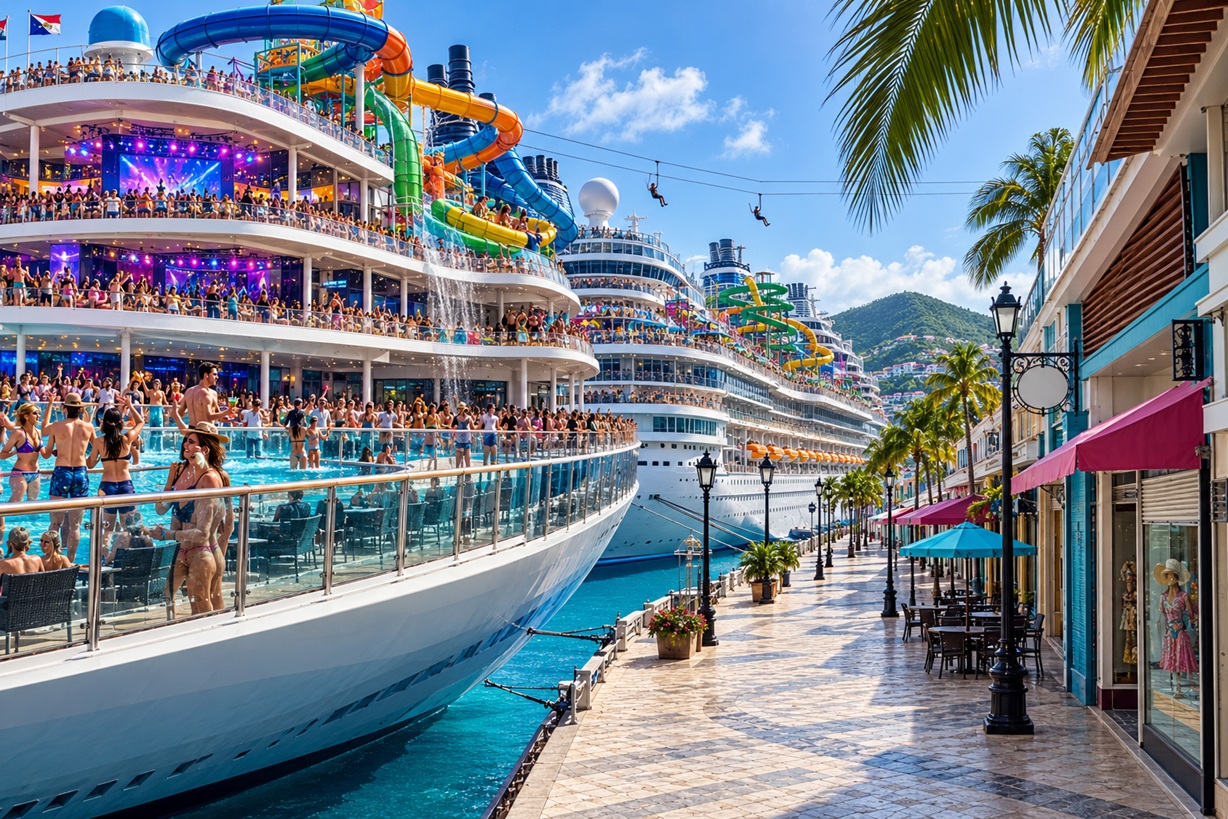
Today the ports have become optional experiences rather than the main attraction. The ship has become the destination. Modern cruise ships feature water parks, Broadway-style entertainment, casinos, luxury spas, shopping malls, dozens of restaurants, surfing simulators, roller coasters, private beach clubs, etc.
From a cruise line business perspective, this is rational. Every dollar spent on board or within a cruise-owned facility is a dollar that remains within the company’s ecosystem. Cruise companies have steadily expanded their control over the tourism value chain. For destinations, revenue is not measured at the gangway. It’s measured in local businesses.
There are warning signs that the destination receives only a small fraction of the total passenger vacation expenditure. Only US$120 may be spent ashore if the passenger spends US$ 1,200 on the cruise itself, 300 on drinks, 250 on specialty dining, 200 in onboard shopping. And when it comes to the ashore spending, mind that a cruise includes several destinations.
The imbalance that is becoming a central issue in cruise economics. The destination still provides port infrastructure, roads, policing and security, environmental management, emergency services, clean beaches and overall appeal. The real question is whether the cruise ship leaves the island fuller—or emptier. Fuller of business, opportunity, pride and prosperity. Or emptier of resources, patience and value. That’s the only statistic worth debating.
If one organism continually extracts more value than it returns, the relationship becomes unstable.
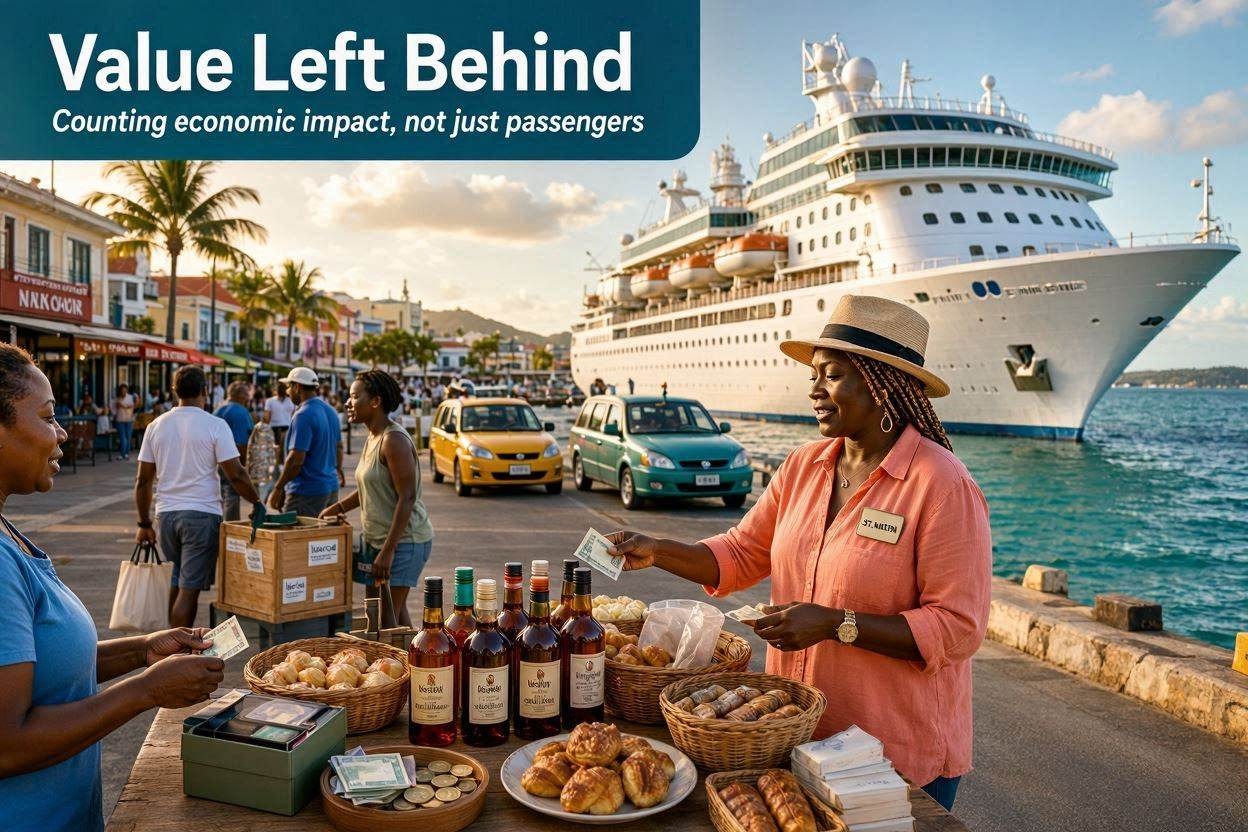
Instead of celebrating statistics, policymakers must exercise foresight and start asking, “How do we ensure that every ship call creates more value for the island than it consumes?” That is a more meaningful measure of success than passenger totals alone. The objective is not more arrivals and passengers. It’s more prosperity. The richest destination isn’t the one with the most and the biggest ships. It’s the one that keeps the most value. Value impresses accountants. Arrival numbers impress port management, politicians and readers who don’t know any better.
Don’t count ships and passengers. Count what they leave behind. A million passengers is not an economic strategy. Volume is a vanity metric. A full ship does not guarantee a full cash register. Value should be the national strategy.
Name Witheld Upon Request
###
ADVERTISEMENT