Advertisement





By Terrance Rey
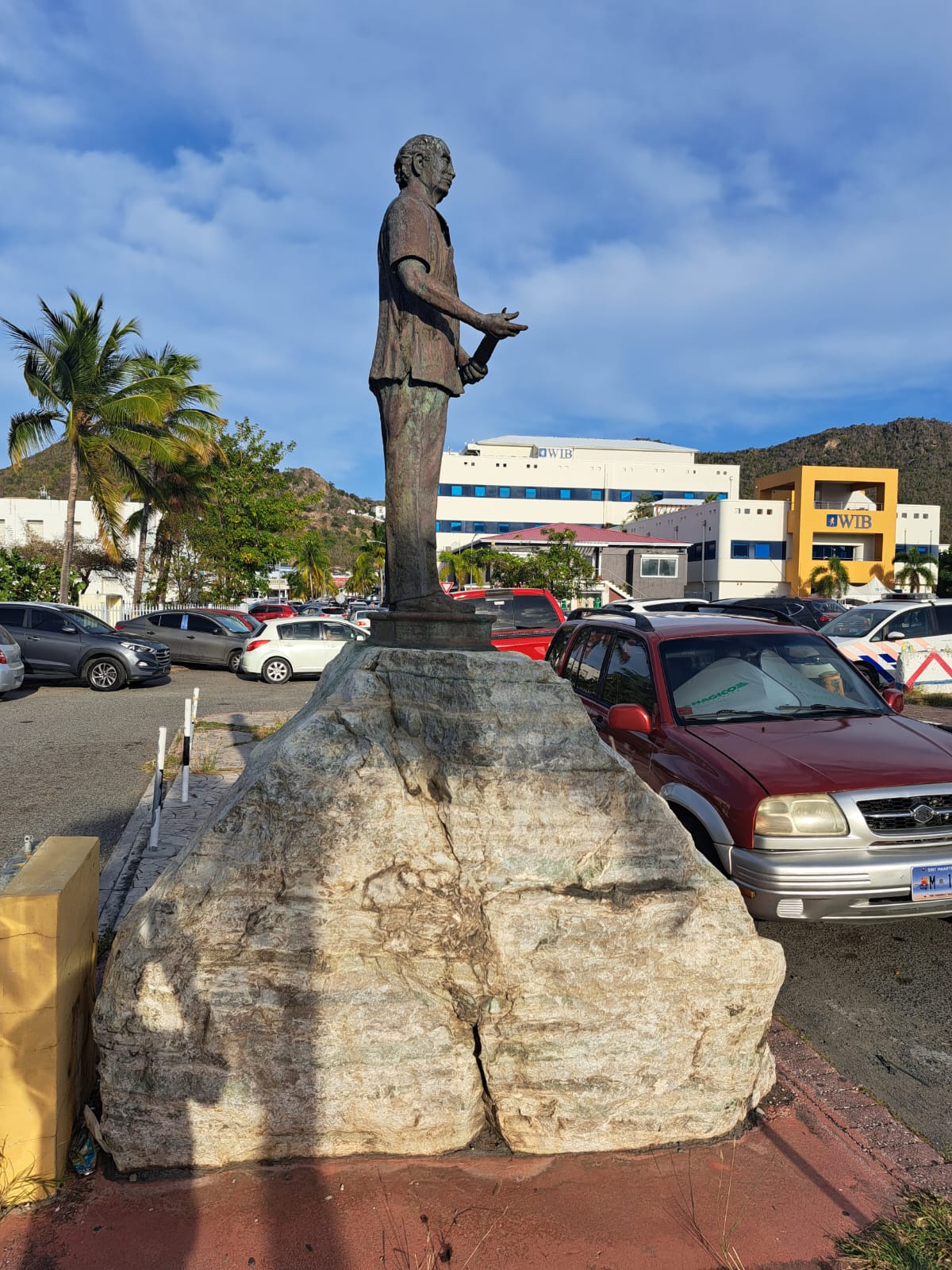
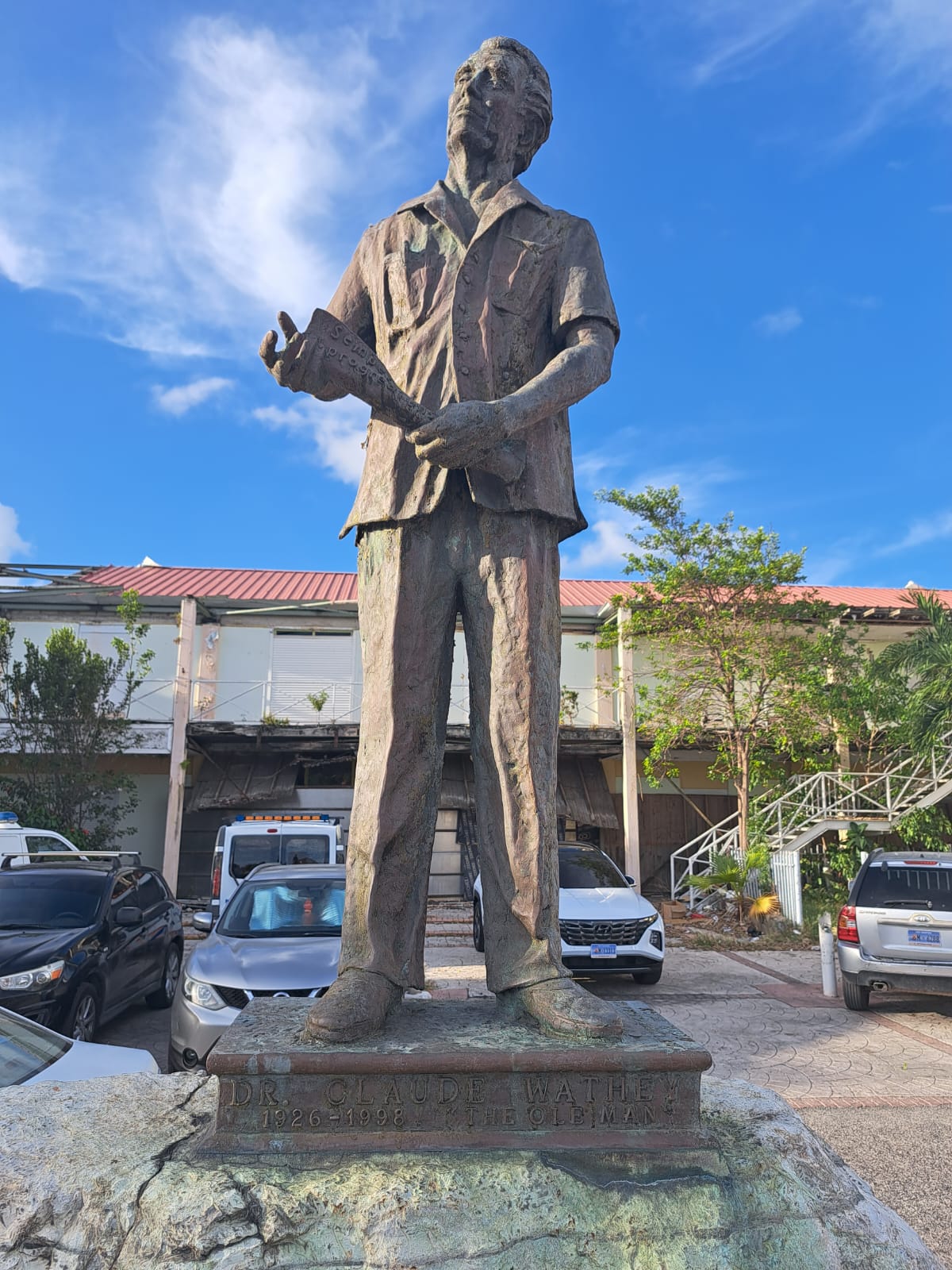
As St. Maarten commemorates the centennial of Dr. Albert Claudius “Claude” Wathey, the island finds itself revisiting one of the most consequential chapters in its history. The speeches have praised his vision. His family has recalled his determination, practical leadership, and impatience with bureaucracy. Government is even considering giving permanent national recognition to his legacy through an annual national observance.
Yet perhaps the most provocative perspective on this centennial did not come from a politician or historian. It came from retired jurist and longtime constitutional activist Denicio Brison during a private WhatsApp exchange.
His argument is as simple as it is controversial:
“Compare the results.”
It is an argument that deserves serious discussion, whether one ultimately agrees with it or not.
You are what your record says you are
Former NFL coach Bill Parcells famously said:
“You are what your record says you are.”
The phrase has become synonymous with judging people by measurable results rather than promises, intentions, or excuses.
Brison applies that same principle not only to politicians, but to entire systems of government.
His comparison is stark.
According to him, the Dutch colonial administration presided over roughly three centuries during which St. Maarten experienced slavery, economic stagnation, widespread poverty, and very limited opportunities for ordinary people.
Claude Wathey, by contrast, governed for roughly thirty years and transformed an island from one people were leaving into one people desperately wanted to come to.
That comparison forms the heart of Brison’s thesis.
Whether one embraces or rejects that conclusion, it is a comparison that cannot simply be dismissed.
A different St. Maarten
The historical context matters.
When Claude Wathey entered politics in the 1950s, St. Maarten was not the tourism powerhouse people know today.
The salt industry had collapsed.
Employment opportunities were scarce.
Young people left for Aruba, Curaçao and elsewhere because they could not build a future at home.
Even Wathey’s own family recently reminded the public that migration had become a necessity for many families and that Wathey believed government had to fundamentally change that reality.
Rather than accepting decline, Wathey saw opportunity.
He recognized that St. Maarten’s beaches, harbor, location and hospitality could become the foundation of an entirely new economy.
Today that sounds obvious.
At the time, it was revolutionary.
Building prosperity
History records the tangible achievements.
Hotels arrived.
Cruise tourism expanded.
The harbor grew.
The airport developed.
Roads were built.
Foreign investment increased.
Thousands of jobs were created.
Entire generations moved from poverty into the middle class.
The island evolved into one of the Caribbean’s leading tourism destinations.
These were not merely government programs.
They fundamentally altered the economic trajectory of St. Maarten.
Even those who later became Wathey’s fiercest critics rarely dispute that his administration laid much of the modern economic foundation upon which the country still depends today.
The uncomfortable contradiction
History, however, rarely produces uncomplicated heroes.
Claude Wathey’s political career ended under the cloud of criminal investigations and allegations of corruption.
Dutch authorities portrayed him as a symbol of everything that had gone wrong in island politics.
Supporters, however, have long argued something different.
They maintain that the investigations became intertwined with larger constitutional and political tensions between St. Maarten and the Netherlands.
Many residents at the time viewed the prosecution not simply as a criminal matter but as an attack on the island’s most influential leader. His family’s recollection of residents surrounding the aircraft that was to take him to Curaçao reflects the extraordinary loyalty he inspired among many St. Maarteners.
The legal and historical debates surrounding those events continue today.
Reasonable people can disagree about the investigations, their fairness, and their implications.
But it is difficult to deny that the controversy became inseparable from broader questions about autonomy, colonial power, and who ultimately controlled St. Maarten’s destiny.
Judging leaders
Brison’s challenge is ultimately philosophical.
Should history judge leaders primarily by allegations?
Or by outcomes?
Neither question has an easy answer.
Great achievements should not automatically excuse wrongdoing if wrongdoing occurred.
Likewise, allegations alone should not erase decades of measurable national progress.
Both realities can exist simultaneously.
History often requires holding two difficult truths together.
Looking through a wider lens
Perhaps the greatest contribution of Brison’s argument is that it forces us to widen the frame.
Too often discussions about Claude Wathey begin and end with corruption.
Far less attention is paid to the extraordinary transformation that occurred during his political lifetime.
If Bill Parcells’ maxim is applied consistently, then the historical record deserves examination in its entirety.
What did St. Maarten look like before Claude Wathey?
What did it look like after?
What opportunities existed before?
What opportunities existed afterward?
Those questions do not erase legitimate criticisms.
They simply insist that history be evaluated in full rather than selectively.
A centennial worth debating
As government considers permanently recognizing Claude Wathey’s contribution, the debate should not revolve around whether he was perfect.
No transformational leader is.
Instead, the discussion should ask a broader question:
What standard should a nation use when judging those who shaped its history?
If the answer is measurable results, then Claude Wathey’s record demands serious study.
If the answer is moral perfection, then few historical figures anywhere in the world would survive such scrutiny.
One hundred years after his birth, perhaps Claude Wathey’s greatest legacy is not merely the hotels, roads, airport, harbor or tourism industry he helped build.
Perhaps it is that he still compels St. Maarten to wrestle with the enduring question every nation must eventually answer:
How should history judge those who changed the course of a country?
As Denicio Brison provocatively reminds us:
“You are what your record says you are.”
Whether one agrees with that conclusion or not, the centennial of Claude Wathey is an appropriate moment to examine the full historical record, compare systems honestly, acknowledge both achievements and shortcomings, and allow history to be judged with the benefit of evidence rather than ideology alone.
###
Related article:
Editorial: We Know How to Build. Now We Must Learn How to Maintain.
###
ADVERTISEMENT