Advertisement





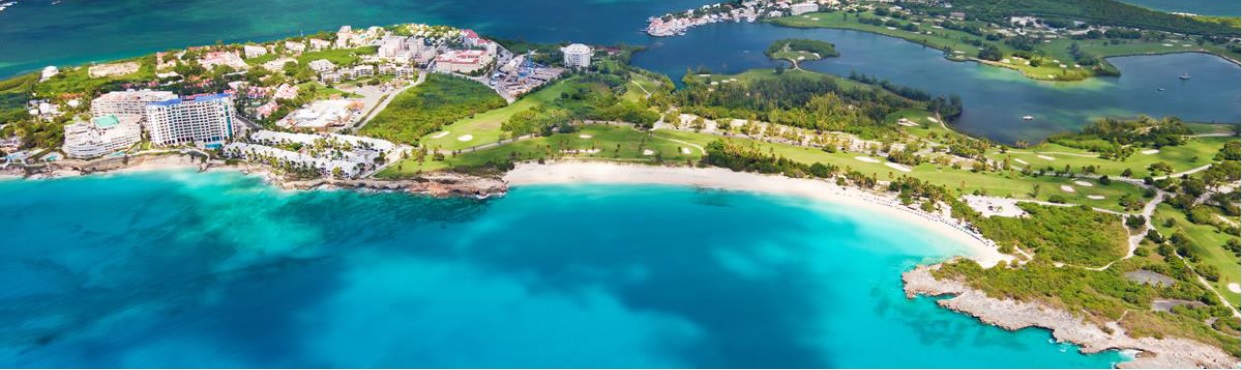
EDITORIAL: Should St. Maarten Buy Mullet Bay? Yes, We Should Seriously Try!
A Letter to the Editor published today by Melisa Molanus asks what may turn out to be one of the most consequential questions confronting St. Maarten in the coming years:
Should St. Maarten buy Mullet Bay?
It is a question this news site believes deserves much more than a passing discussion.
In fact, for us, the idea is not new.
Ten years ago, on September 19, 2016, we published a letter under the headline “Put Your Money Where Your Mouth Is.”
The argument then was simple. If the people of St. Maarten believe that important pieces of this island should be protected, preserved and developed in the long-term interest of the population, then at some point we have to move beyond protesting what private owners do with private property.
We have to become owners ourselves.
We specifically proposed what we called the Mullet Bay Buy Back Initiative.
The idea was that Government, the private sector, institutional investors and the people of St. Maarten could explore a structure through which Mullet Bay could ultimately return to local ownership.
Ten years later, Melisa Molanus has brought that question back to the table from an entirely different direction.
And perhaps the timing has never been better.
From ENNIA liability to national asset
Molanus makes an interesting observation.
St. Maarten already has a long-term financial obligation connected to the ENNIA resolution. At the same time, Mullet Bay is one of the important assets connected to that resolution, and St. Maarten negotiated a right of first refusal concerning the property.
Her question, therefore, is worth examining:
If we are going to carry financial obligations arising from ENNIA anyway, should we at least investigate whether Mullet Bay can become part of the solution?
Instead of eventually seeing the property sold to another private investor, could St. Maarten acquire it?
Could we finance it over the long term?
Could we develop portions of it responsibly?
Could the property generate income through leases, concessions, tourism activities, commercial development and other carefully structured economic uses?
Could part of that income service the financing required to acquire the property?
And after that financing has eventually been repaid, could future generations inherit an enormously valuable national asset instead of merely hearing stories about what Mullet Bay once was?
These are questions worth answering.
Buying Mullet Bay does not mean freezing Mullet Bay
Government ownership should not mean purchasing hundreds of millions of guilders worth of property simply to fence it off and leave it untouched.
Nor should it mean turning Government into a hotel operator or real estate developer.
There is a third way.
Government can own the land while allowing carefully selected private investors to develop and operate appropriate projects through long-term leases, concessions and public private partnerships.
That distinction is important.
Ownership and development are not the same thing.
St. Maarten could retain ownership of the underlying land while leasing designated areas for hotels, restaurants, recreational facilities, residential development, tourism attractions and other economically productive uses.
The country could establish in advance what must remain protected, what must remain accessible to the public, what may be developed and under what conditions.
That is what ownership gives us: control over the long-term destiny of the property.
And because Mullet Bay Beach itself has now been confirmed by the Court as public property, there is an opportunity to think much more comprehensively about the surrounding area and its relationship to one of the island’s most important beaches.
An asset should produce income
There is another important principle.
If St. Maarten acquires Mullet Bay, the objective should not merely be conservation.
It should be conservation combined with productive ownership.
A properly structured Mullet Bay development could potentially generate lease income, concession fees, commercial rents, tourism revenues and additional tax revenues while simultaneously preserving substantial portions of the property for recreation, nature, public access and future generations.
Imagine a structure where Government owns the land permanently but private capital finances much of its productive development.
Instead of selling the land, we lease it.
Instead of surrendering control, we establish the development conditions.
Instead of collecting a one-time sales price, the people of St. Maarten retain the underlying asset while creating recurring income from it.
That is the kind of generational thinking we should be discussing.
The numbers still have to work
None of this means Government should simply announce tomorrow morning that it is buying Mullet Bay.
Molanus correctly acknowledges that herself.
The numbers have to work.
Government must establish the current value of the property, the actual acquisition price, the financing terms available, annual debt service, development costs, potential revenues and financial risks.
Those calculations should not be political guesswork.
They should be professionally modelled and made available for public and parliamentary scrutiny.
If the numbers ultimately demonstrate that acquisition cannot responsibly be financed, then the country will at least have reached that conclusion after doing the work.
But dismissing the possibility without doing that work would be equally irresponsible.
Think beyond one government
A 30-year acquisition cannot be approached as the project of one Cabinet, one political party or one parliamentary term.
Thirty years from now, most of today’s Ministers and Members of Parliament will be long gone from public office.
Mullet Bay will still be here.
That is precisely why this discussion should transcend electoral politics.
The question is not what Mullet Bay can do for the Government of 2026.
The question is what Mullet Bay could do for the people of St. Maarten in 2036, 2046, 2056 and beyond.
Land is one resource this island cannot manufacture more of.
And large, strategically located parcels of land become more valuable and more difficult to recover once they leave local control.
Ten years later, the opportunity returns
In 2016, we argued that St. Maarteners should put their money where their mouth is and find a way to buy back Mullet Bay.
At the time, the financial circumstances were very different.
Today, ENNIA has unexpectedly brought the question back before us.
St. Maarten has negotiated a right of first refusal.
That right has value only if we seriously examine whether we can exercise it.
So Melisa Molanus is asking the right question.
Should Sint Maarten buy Mullet Bay?
We believe Government should determine what it would take to do exactly that.
Put the valuation on the table.
Put the financing options on the table.
Put the development possibilities on the table.
Put the projected revenues on the table.
Put the risks on the table.
And then let Parliament and the people of St. Maarten see whether the numbers work.
Because this is about much more than buying real estate.
It is about ownership.
It is about economic participation.
It is about preserving an important part of St. Maarten while allowing that asset to work economically for the people who own it.
And it is about whether, thirty years from now, our children will look back and say that this generation had an opportunity to reclaim one of the most important properties on the island and allowed it to slip away.
Or whether they will be able to say:
This belongs to the people of St. Maarten.
We bought it.
We protected it.
We developed it responsibly.
And we kept it for the generations that came after us.
That is an opportunity worth investigating.
The Publisher
StMaartenNews.com
###
Related articles:
The Math Makes the Case for Exploring a Government Purchase of Mullet Bay
If We Don’t Own St. Maarten, What Exactly Are We Building?
Put Your Money Where Your Mouth Is
Mullet Bay archived articles>>>>
###
ADVERTISEMENT