Advertisement





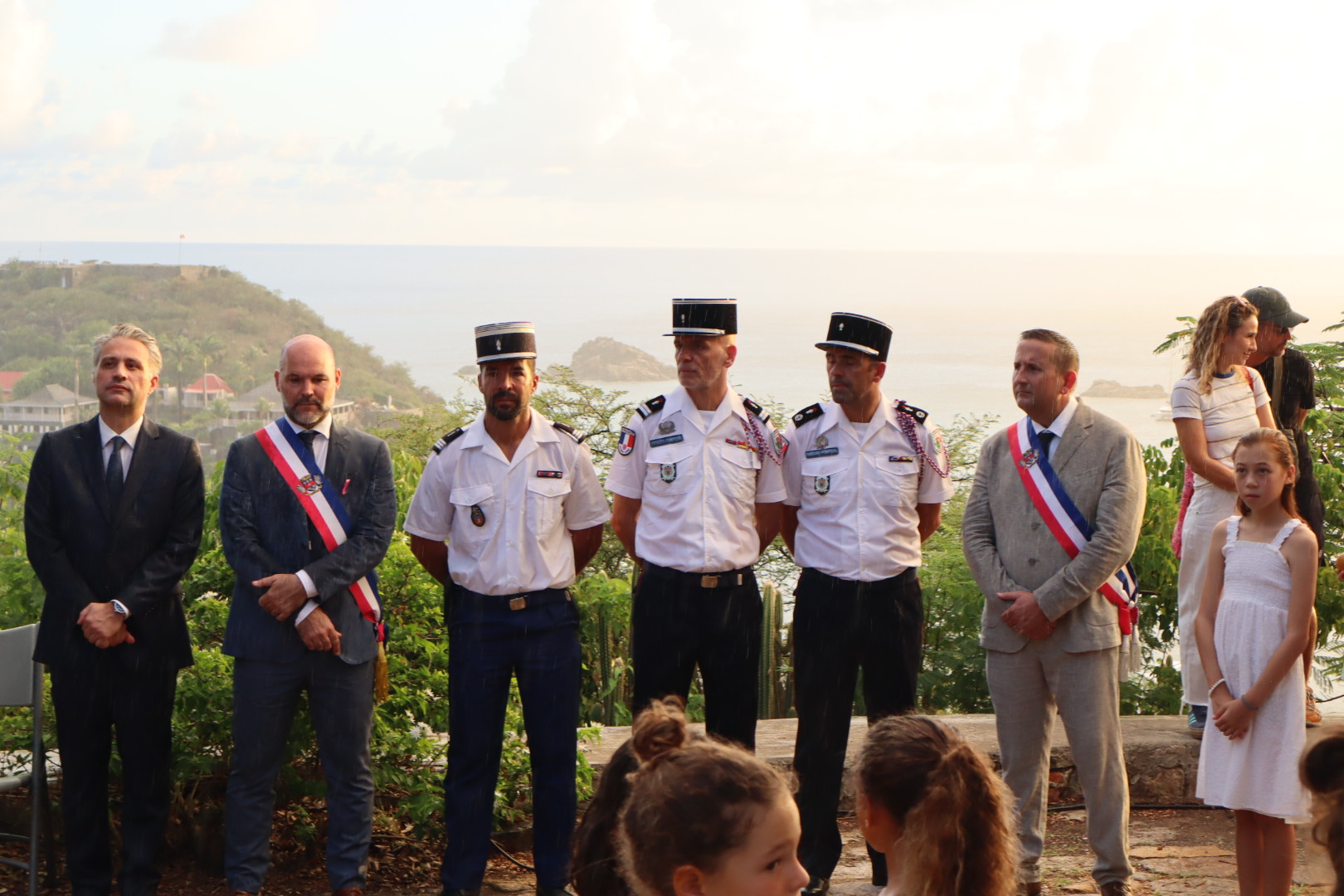
GUSTAVIA – St. Barthélemy commemorated the abolition of slavery on October 9, marking the historic date in 1847 when Sweden abolished slavery on the island, then under Swedish rule.
The ceremony took place at Fort Gustav III, beneath the historic lighthouse overlooking Gustavia. The gathering centered on an old, towering fromager tree, also known as a kapok tree, which has become a symbolic setting for the island’s remembrance of slavery and its abolition.
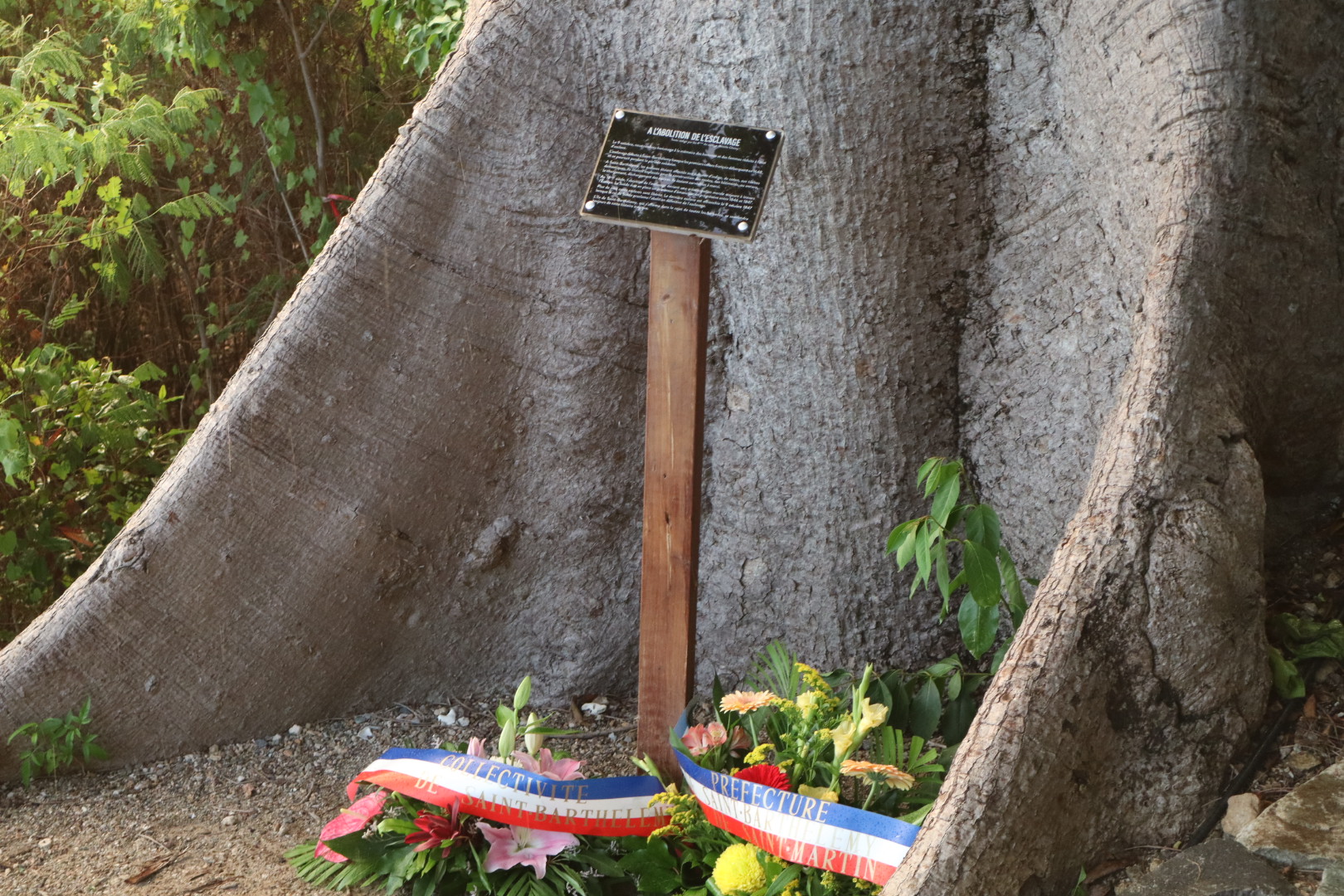
During the ceremony, Xavier Lédée, president of the Territorial Council of St. Barthélemy, laid a wreath of flowers at the foot of the tree in tribute to those who endured enslavement.
Music accompanied the gathering as officials and attendees came together to remember this painful chapter in the island’s history. Although rain began to fall during the ceremony, those present remained in place and the commemoration continued.
President calls for vigilance against injustice
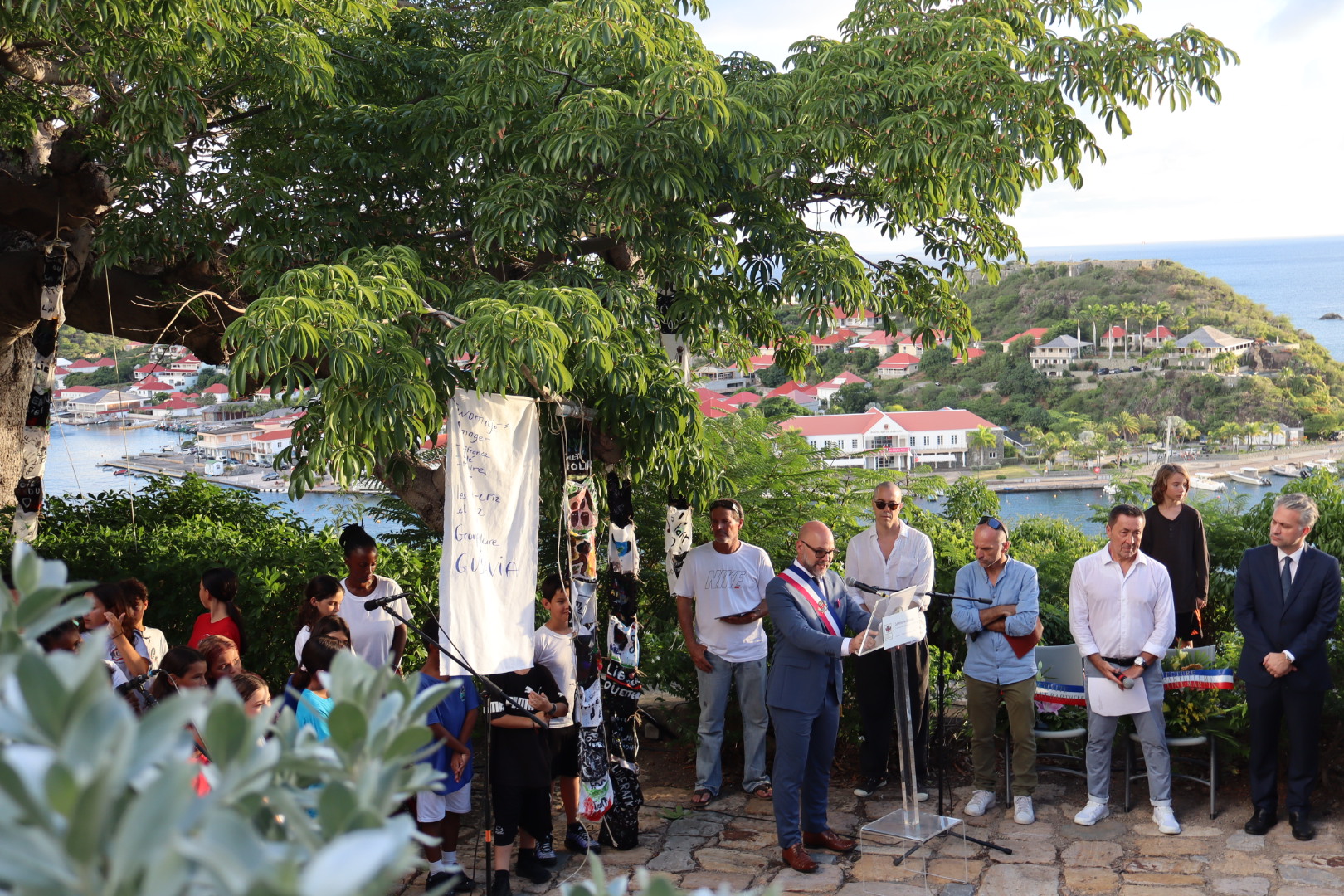
In his address, Lédée emphasized the importance of passing the memory of slavery on to younger generations. He thanked students from the schools of Colombier, Gustavia and Lorient for their participation in the commemoration, including their songs, poetry, artwork and other creative contributions.
He encouraged the community to support young people’s curiosity and answer their questions as they learn about the island’s past.
Addressing those gathered, Lédée called for respect for the memory of the women and men who suffered under slavery and urged continued commitment to the values of liberty, equality and fraternity.
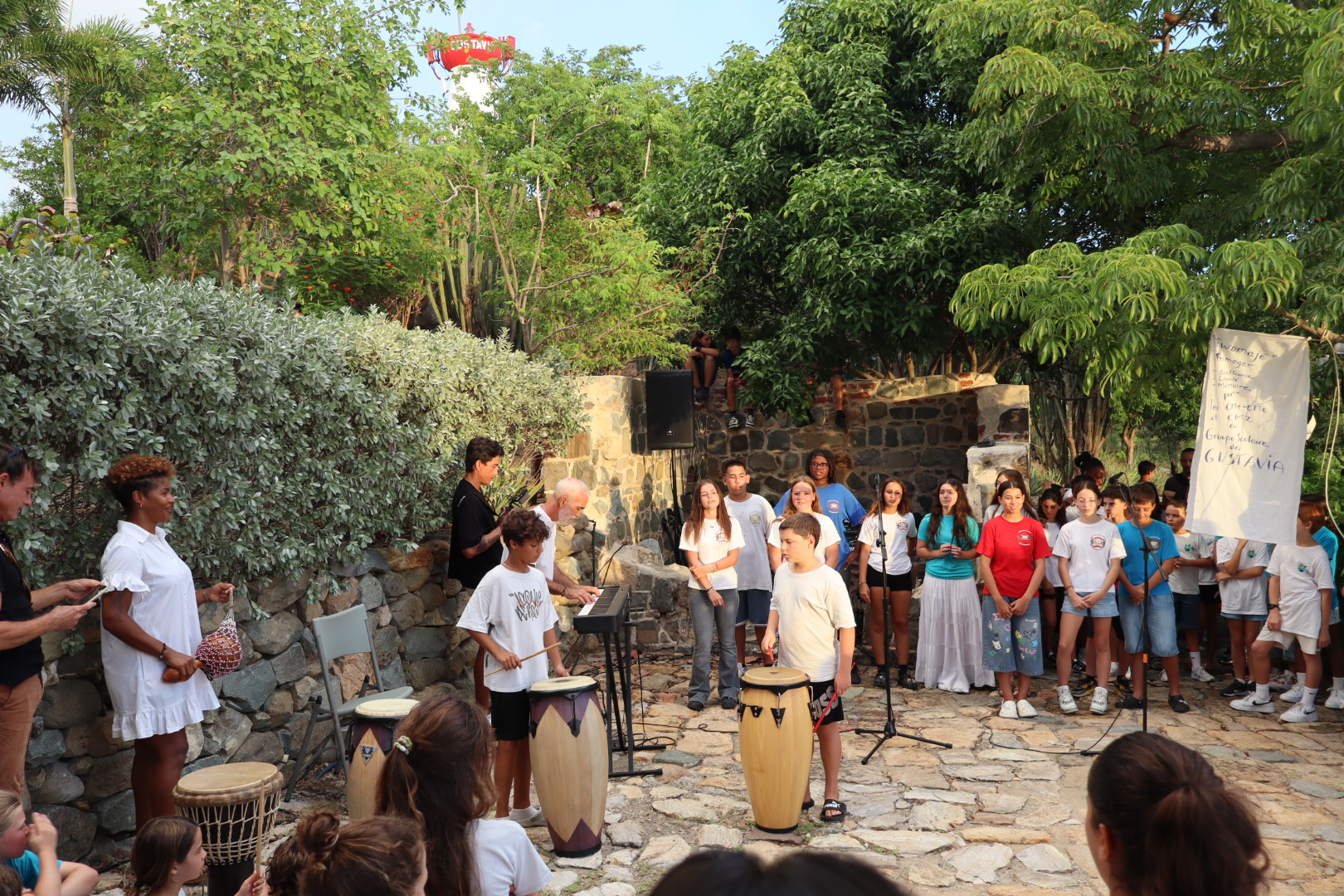
He also stressed the responsibility to pass knowledge of the past on to future generations, alongside vigilance in the face of injustice and the determination to keep hope alive.
His message was summed up in the call: “Connaître l’injustice et le courage de ne pas l’accepter” — to recognize injustice and have the courage not to accept it.
Importance of historical memory
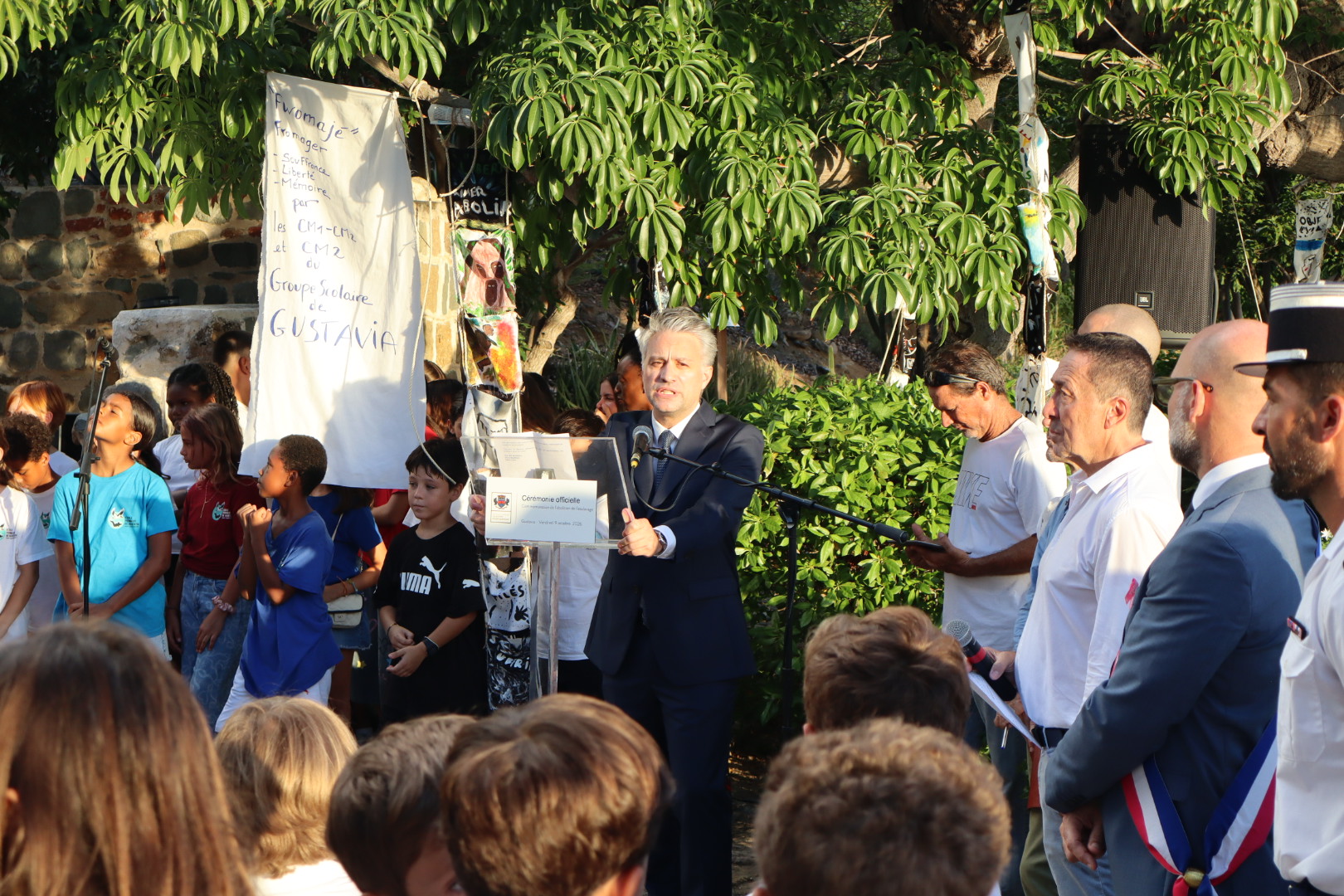
Joris Eberhardt, the prefect’s representative in St. Barthélemy, followed Lédée with an address emphasizing the importance of acknowledging history in its entirety and passing that knowledge on to future generations.
“Above all, it reminds us that these stories do not erase one another. They follow one another, intertwine, and today form the history of a single territory. It is this history, in all its uniqueness, that we have a responsibility to know and pass on. It is by fully acknowledging its past that Saint-Barthélemy can continue to write its future. Long live Saint-Barthélemy, long live the Republic, and long live France!”
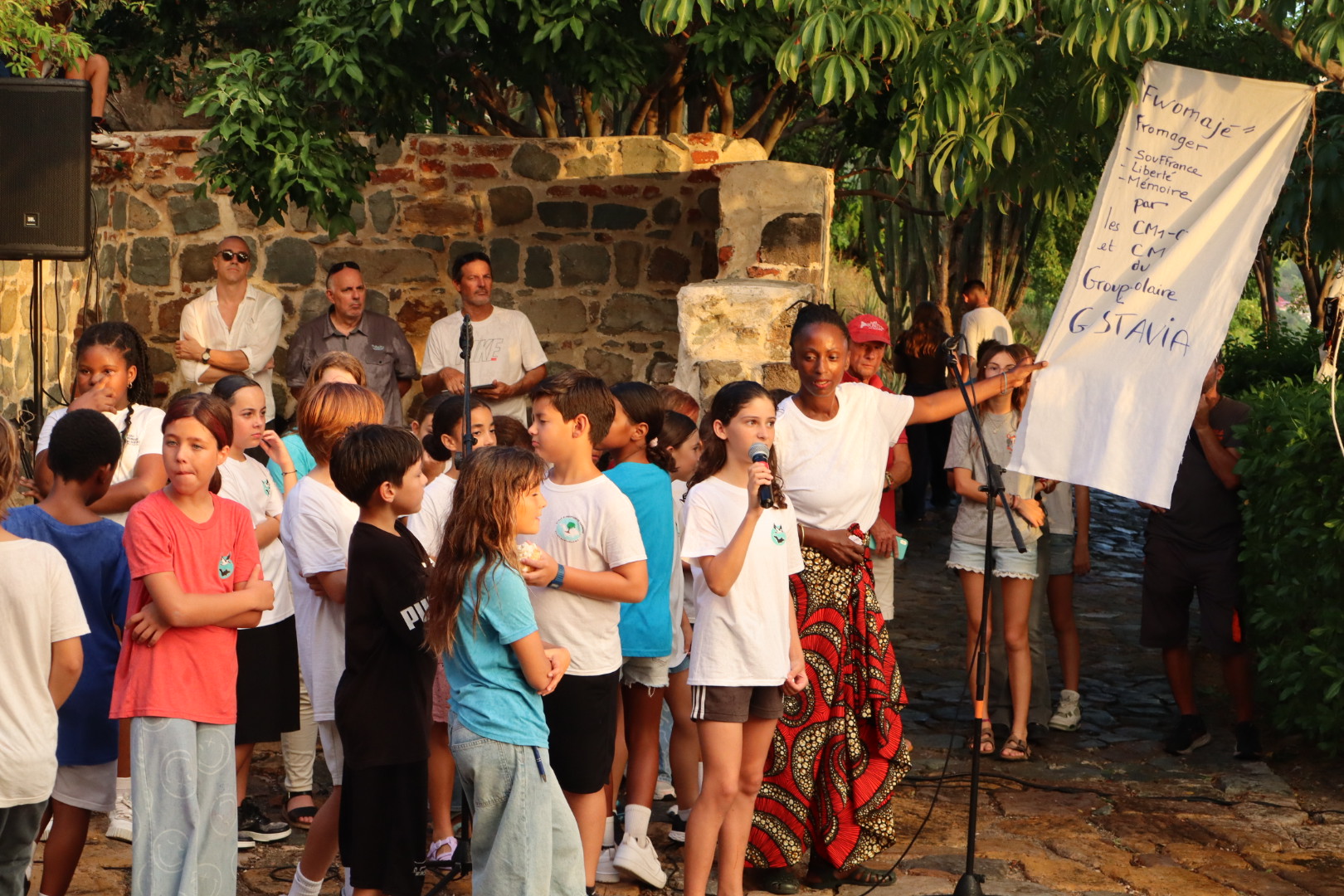
Eberhardt’s remarks underscored the importance of recognizing the island’s history in all its complexity and ensuring that future generations understand the events that helped shape the territory.
Francius Matignon, vice-president of the Territorial Council of St. Barthélemy, was also present at the commemoration.
Misconceptions about slavery on St. Barthélemy
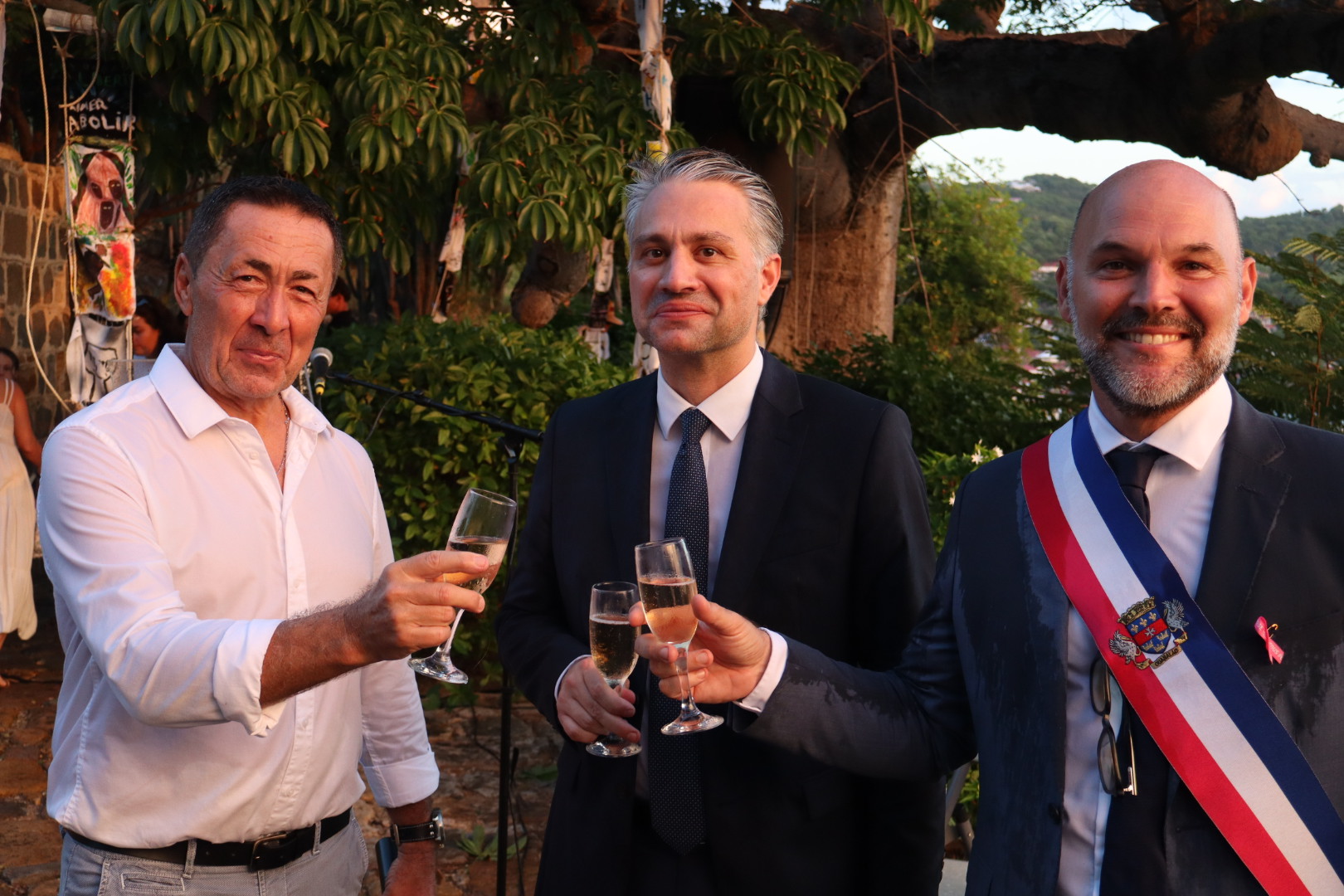
Philippe Kin, master of ceremonies for the commemoration, spoke to StMaartenNews.com about misconceptions surrounding the history of slavery on the island.
One persistent misconception is that slavery never existed on St. Barthélemy because the island had no large plantations and limited water resources. Kin explained that enslaved people nevertheless played a role in the island’s economy, including work connected to the harbor and the commercial activity that developed during the Swedish period.
Kin said his own understanding of the island’s history had changed over time. He arrived on St. Barthélemy in 1986, while his father had arrived in 1981. His father had told him that slavery had not existed on the island, but Kin later researched the subject and discovered that this understanding was incorrect.
The history, he explained, is an important part of the island’s past and deserves to be recognized rather than overlooked.
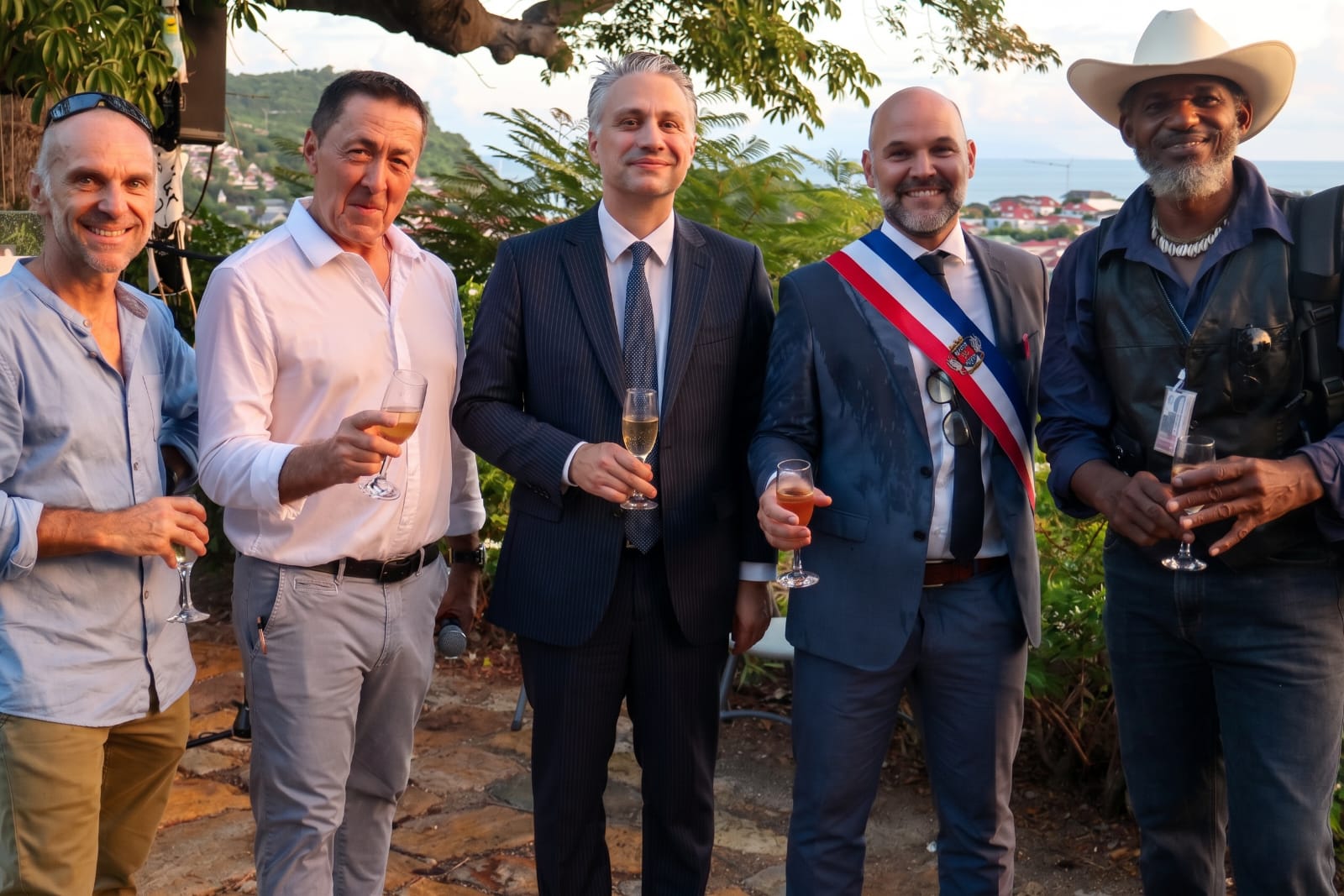
The October 9 commemoration serves as a reminder that the history of slavery on St. Barthélemy is an integral part of the territory’s heritage. By gathering beneath the historic fromager tree at Fort Gustav III, participants honored those who endured slavery and reaffirmed the importance of historical knowledge and remembrance.
###
Similar articles:
President Xavier Lédée calls for stronger links between St. Maarten and Saint-Barthélemy
Xavier Lédée: From local roots to the Presidency of Saint-Barthélemy
Street names, addresses, and accountability: How Saint-Barthélemy is redrawing its map
###
ADVERTISEMENT