Advertisement





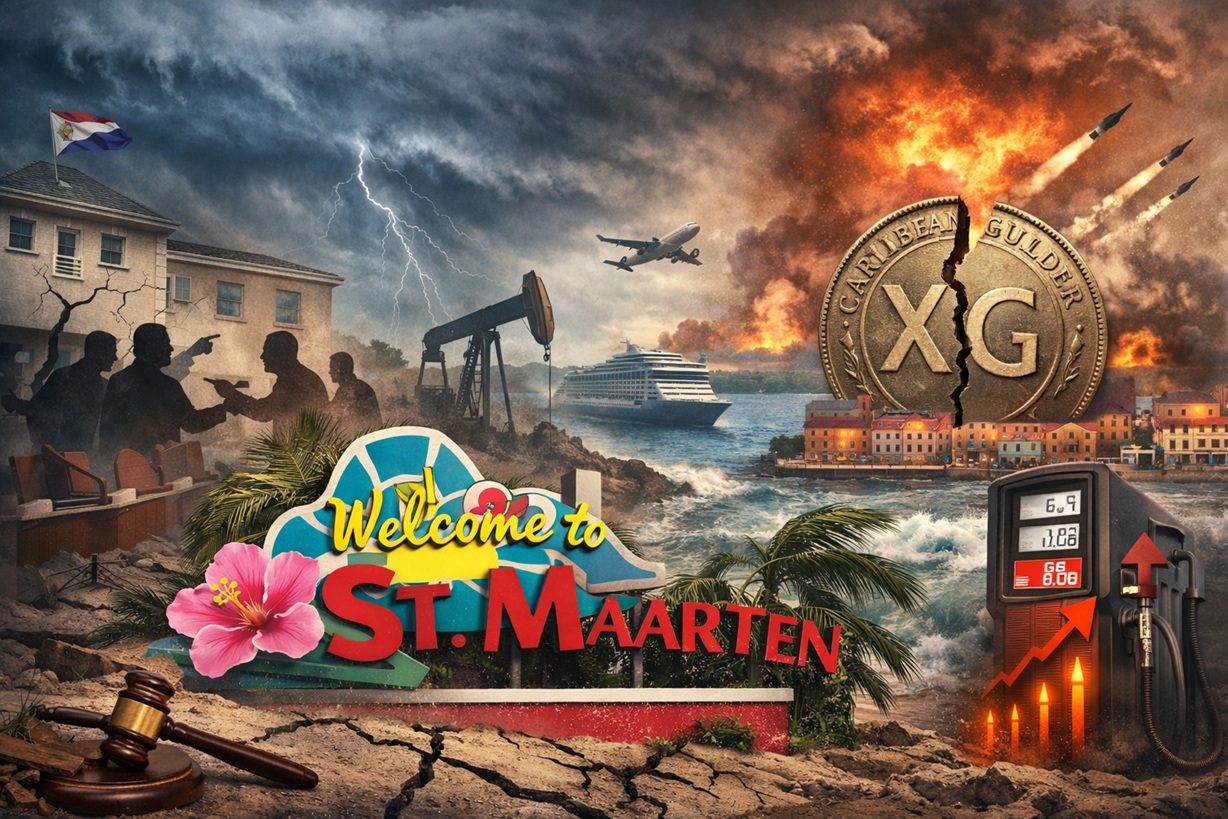
St. Maarten today finds itself under mounting pressure as global developments continue to spiral in an increasingly negative direction, tightening their grip on small, open economies that rely heavily on external stability. From rising geopolitical tensions driving up energy costs to weakening global growth and shifting tourism dynamics, the island is being squeezed from all sides. What once felt distant is now immediate, as higher fuel prices, increased cost of living, and uncertainty in global travel begin to weigh on households, businesses, and government alike. This is not a passing phase but a convergence of pressures that demand clarity, focus, and decisive leadership.
Against this global backdrop, what dominates the national conversation is deeply concerning. Motions to dismiss ministers, internal party disputes, and public infighting have taken center stage, alongside governance instability in critical ministries such as VROMI and VSA. These are not trivial matters, but the manner in which they are unfolding suggests a government consumed by internal conflict rather than external threats. At a time when the world is bracing for economic shock, St. Maarten appears distracted. Leadership is not tested when conditions are calm, but when difficult choices must be made and priorities must be set. Right now, the wrong priorities are winning.
The introduction of the Caribbean Guilder should have been a moment of financial stability and regional confidence, signaling a step forward in monetary cooperation. Instead, uncertainty is growing. If Curaçao seriously considers exiting the monetary union, St. Maarten could face currency instability, a loss of monetary backing, and serious questions about who will absorb the cost of transition. In a world already destabilized by war and inflation, monetary uncertainty is not just risky, it is dangerous. Yet this issue is not dominating national debate in the way it should, leaving the public without clarity on a matter that strikes at the heart of economic security.
The convergence of these challenges creates a perfect storm. A fragile, tourism-dependent economy is now exposed to rising global energy prices, potential currency instability, and domestic political fragmentation. Each of these challenges on its own could be managed with careful planning and strong leadership. Together, they become existential. The greatest danger facing St. Maarten today is not any single crisis, but the failure to recognize that these crises are interconnected and compounding one another.
This is where leadership must refocus its attention. Economic resilience must become a priority through diversification beyond cruise dependency, strengthening stay-over tourism, and supporting local production wherever possible. An energy strategy is urgently needed to prepare for sustained high fuel costs, accelerate renewable energy discussions, and reduce reliance on imported energy. Monetary stability demands clear and transparent communication about the future of the Caribbean Guilder, along with contingency planning for worst-case scenarios. At the same time, governance stability must be restored by ending public political infighting, rebuilding credibility in key ministries, and demonstrating unity in the face of global uncertainty.
History will not judge this moment based on who prevailed in a political dispute or internal party struggle. It will judge whether St. Maarten’s leaders recognized the storm forming beyond our shores and chose to act with purpose. The world is changing rapidly, and energy shocks, economic uncertainty, and geopolitical instability are redefining what it means to be a small island economy. The question is no longer whether these forces will affect us, they already are. The real question is whether we will respond with vision and discipline, or continue to drift while the tide steadily rises.
###
ADVERTISEMENT