Advertisement





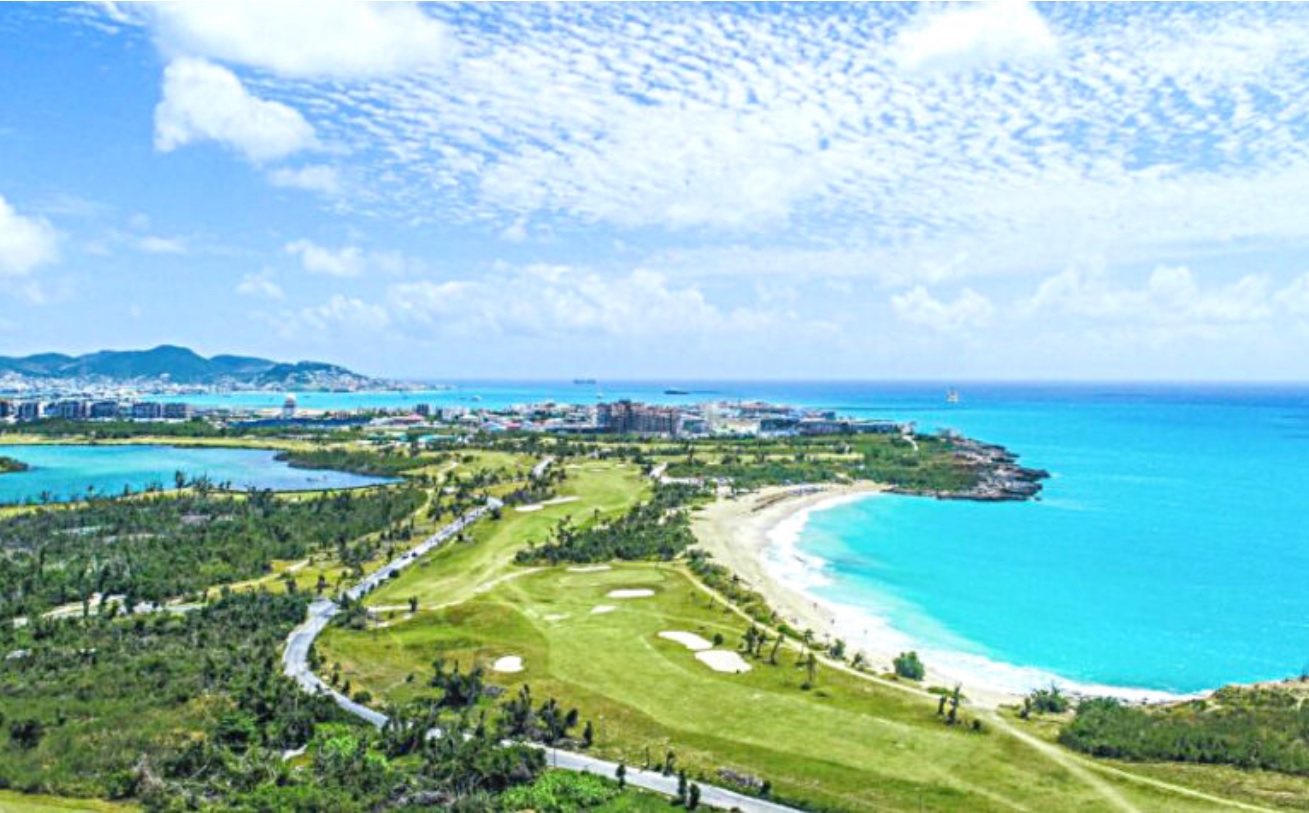
Letter to the Editor: The Math Makes the Case for Exploring a Government Purchase of Mullet Bay
Dear Editor,
The ongoing budget debate in Parliament has exposed a critical choice concerning the future of Mullet Bay and Sint Maarten’s long-term financial obligations under the ENNIA resolution.
Before we allow one of the country’s most valuable pieces of privately owned land to pass into other hands, we should first ask a very simple question:
If Sint Maarten is already committed to paying for the ENNIA resolution for the next 30 years, why shouldn’t we seriously examine whether acquiring Mullet Bay could turn part of that liability into a productive national asset?
The numbers deserve attention.
Beginning in 2027, Sint Maarten is expected to contribute Cg 2.082 million annually for 30 years to the ENNIA Resolution Fund.
Separate from that annual obligation, Sint Maarten carries a 6.49% guarantee exposure under the Cg 500 million Peak Facility—up to Cg 32.45 million. Government has explained that current projections anticipate substantially less actually being required, but the contingent liability nevertheless exists.
Mullet Bay is directly connected to this financial structure.
Sint Maarten successfully negotiated a right of first refusal regarding the property. Under the ENNIA resolution arrangements, proceeds from an eventual sale of Mullet Bay are intended to flow into the Resolution Fund and help reduce the financial cost of the resolution.
That raises an obvious national-policy question:
Should Sint Maarten simply watch the asset be sold, or should we determine whether owning and responsibly developing it ourselves could produce greater long-term value for the country?
Consider a simple financing illustration.
For illustration, if the property could be acquired for Cg 153 million(*), spreading the principal over 30 years would equal roughly Cg 5.1 million per year before interest.
That does not establish what an actual financing package would cost. Interest rates, repayment terms, development costs and the final purchase price would all matter.
But it demonstrates why the idea deserves serious financial modelling rather than immediate dismissal.
The Government has already indicated that it is examining financing and structuring possibilities connected to exercising its right of first refusal. Given that Mullet Bay sits within the broader ENNIA resolution framework involving Sint Maarten, Curaçao and the Central Bank, every possible financing structure should be examined—including whether favourable long-term financing can be negotiated.
Then compare the two choices.
Under one scenario, Sint Maarten continues making its ENNIA contributions while Mullet Bay is eventually sold and developed by another owner.
Under another, Sint Maarten investigates whether it can acquire the property and structure a commercially viable development that generates lease income, concession revenue, taxes and other economic returns while preserving this strategic asset for future generations.
The second option is not automatically profitable. Government would have to demonstrate that the acquisition price, financing costs, development model, risks and projected revenues actually work.
But that calculation should be done.
This is particularly important because Mullet Bay Beach itself has now been confirmed by the Court to be public property. The question before us concerns the privately owned land surrounding and behind that beach and what role it should play in Sint Maarten’s economic future.
This should therefore not be reduced to emotion or nostalgia.
Put the numbers on the table.
What is the acquisition price?
What financing can Sint Maarten obtain?
What would annual debt service actually be?
What revenue could the property conservatively generate?
How much could be returned to Government?
And how does that compare with allowing the property to be sold while Sint Maarten continues carrying its ENNIA obligations?
Sint Maarten negotiated the right of first refusal for a reason.
Before that right disappears, Parliament and Government should determine—with transparent financial modelling—whether Mullet Bay can be transformed from an asset connected to the ENNIA crisis into a productive, locally controlled national investment.
We already carry the ENNIA obligation. The question now is whether we can turn part of that burden into an asset.
That is the math Sint Maarten deserves to see.
Sincerely,
Melisa Molanus
(*) Note: A court-appointed independent expert from Colliers International Valuation and Advisory Services assessed the fair value of Mullet Bay at US$85 million. Converted at the official exchange rate of Cg 1.80 to US$1, that historical valuation is equivalent to approximately Cg 153 million.
###
Related articles:
EDITORIAL: Should St. Maarten Buy Mullet Bay? Yes, We Should Seriously Try!
Put Your Money Where Your Mouth Is
Mullet Bay archived articles>>>>
###
ADVERTISEMENT