Advertisement





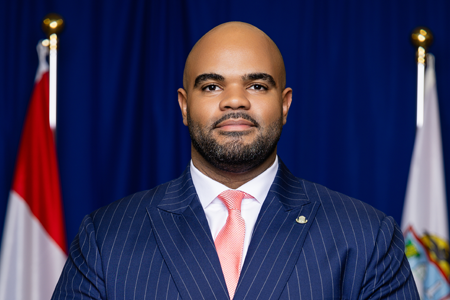
The failure of the government’s latest solid waste tender process has forced the Ministry of Public Housing, Spatial Planning, Environment and Infrastructure (VROMI) to reset its approach, with Minister Patrice Gumbs announcing a series of corrective measures, including an external review, temporary contract extensions, and broader reforms to the country’s waste management system.
Addressing Parliament on Wednesday, Minister Gumbs acknowledged that all 17 bidders in the 2026–2029 garbage collection tender failed to meet mandatory eligibility requirements, effectively halting the awarding process and requiring government to reconsider its next steps.
The Minister explained that allowing corrections to bids during the evaluation phase would have compromised the integrity of the process. “Doing this would mean changing the terms of reference mid-evaluation and would constitute a significant ethical challenge,” he said, noting that equal treatment of all bidders was necessary to ensure fairness and transparency.
The parliamentary meeting had been convened at the request of all six opposition Members of Parliament—Francisco Lacroes and Omar Ottley of the United People’s (UP) party, Egbert Doran, Ardwell Irion and Darryl York of the National Alliance (NA), and Lyndon Lewis of the Nation, Opportunity and Wealth (NOW) party—who sought clarity on the failed tender, garbage collection issues, and the ministry’s broader waste management strategy.
While the session began with a detailed presentation by the Minister, it quickly became clear that the issue of garbage collection and the failed tender process remains a critical concern for both Parliament and the public.
Tender process breakdown
Minister Gumbs provided a step-by-step account of the tender process, from the drafting of the terms of reference (TOR) to the final evaluation stage. The TOR, finalized in November 2025, was developed following consultations with garbage haulers, residents, and recommendations outlined in the Ombudsman’s report on previous tenders.
A mandatory information session was held on January 7, 2026, where the terms were explained in detail to prospective bidders. According to the Minister, 10 companies submitted a total of 111 questions, reflecting what he described as significant interest in the process.
However, during the evaluation phase at the end of January, the committee determined that none of the 17 bidders met the strict eligibility criteria. As a result, the tender could not proceed to awarding.
The evaluation committee proposed allowing bidders to correct minor errors, such as missing signatures or incomplete documentation. However, the Minister said this approach was ultimately rejected to avoid altering the rules after the process had already begun.
“All disqualifications must therefore be considered equal,” Gumbs stated, referencing concerns raised in the Ombudsman’s 2022 report about fairness and consistency in tender procedures.
Immediate measures and next steps
In response to the failed tender, the Ministry of VROMI has taken several immediate actions to ensure continuity of garbage collection services. Existing contracts have been extended by six months, allowing time for a comprehensive review and the preparation of a new tender process.
The Ministry has also engaged international consultancy firm Grant Thornton to conduct an independent assessment of the tender, with a focus on financial structures, market conditions, and procedural design. “This decision was taken to ensure an objective review that would provide a comprehensive way forward,” the Minister said.
Additionally, adjustments were made to address service gaps in specific districts. After determining that existing contractors could not take on additional parcels, the Ministry secured an external contractor to maintain collection services during the interim period.
Current state of garbage collection
Turning to the current system, Minister Gumbs explained that under the 2021–2026 contract, St. Maarten is divided into seven collection zones, each requiring a specified number of trucks and adherence to fixed collection schedules.
Government contracts cover household waste collection, which is generally carried out daily, with more frequent service in high-density areas such as Philipsburg and Point Blanche. However, the Minister acknowledged that the existing system faces multiple challenges, including financial constraints, limited enforcement capacity, and persistent issues with illegal dumping.
A key issue highlighted in the presentation was the lack of effective enforcement mechanisms under the current Waste Ordinance, which dates back to 1993. While the law clearly outlines rules for waste disposal—including restrictions on placing garbage outside designated collection times and prohibitions on storing derelict vehicles—there is no administrative framework in place to enforce these rules through fines or penalties. As a result, violations must be handled through the Prosecutor’s Office, limiting the Ministry’s ability to respond quickly and consistently.
“The ordinance outlines what is not allowed, but there is no executionary law giving inspection the ability to issue fines,” Gumbs explained.
The Minister also pointed to behavioral challenges, noting that despite free waste collection services, illegal dumping remains widespread. “This tells me there is a lack of understanding of the impacts of poorly disposed waste, a lack of personal accountability, and a diminished sense of community,” he said.
Structural challenges
Beyond enforcement, Gumbs identified several structural issues affecting the waste sector. These include the absence of a dedicated funding mechanism, meaning waste management must compete with other national priorities such as healthcare, education, and infrastructure. Human resource limitations were also cited as a major constraint, with insufficient personnel to monitor compliance and follow up on reported issues.
To address these gaps, the Ministry of VROMI is increasingly relying on technology, including camera systems and planned drone deployment, to improve monitoring and enforcement capabilities.
New Waste Ordinance
Looking ahead, Minister Gumbs outlined a comprehensive reform agenda aimed at modernizing the waste sector. Central to this effort is the introduction of a new Waste Ordinance, expected to be submitted to Parliament in the second quarter of 2026.
The proposed legislation includes the establishment of an independent waste authority, which would oversee all aspects of waste management and improve coordination across the sector.
The government is also working to develop a sustainable financial framework, potentially including the introduction of landfill tipping fees and household contributions through utility bills. In parallel, efforts are underway to strengthen enforcement capacity, with staff receiving specialized training in inspection and compliance.
Public education will also play a key role, with the Ministry preparing to launch a “Think Green” campaign aimed at raising awareness about proper waste disposal and environmental responsibility.
Landfill and future waste solutions
The long-term strategy also includes plans to close and rehabilitate the existing landfill, supported by the Emergency Debris Management Program (EDMP) funded through the Trust Fund of the World Bank. Minister Gumbs informed Parliament that four shortlisted bidders have been invited to submit proposals for the landfill rehabilitation project.
In addition, the government is exploring alternative waste management solutions, including waste export and waste-to-energy initiatives, potentially in collaboration with regional partners.
###
ADVERTISEMENT