Advertisement





By Hilbert Haar
Concerned citizen Shandrika Peterson did what utilities company NV GEBE should have done a long time ago: she asked clients to participate in an online survey and express their concerns about the price and the availability of electricity in St. Maarten. In itself, this is of course a commendable initiative.
See related article here: https://stmaartennews.com/social/online-survey-returns-predictable-results-about-concerns-regarding-nv-gebe/
But citizens who thought that this public community report would also contain solutions for their concerns must now be sorely disappointed because the report does not contain solutions. Not one.
The logical question is then obviously: are there solutions? One of the options mentioned in the report is the expansion of renewable energy. While this sounds logical it will not offer the solution citizens are waiting for.
This is because producing electricity requires fixed costs. Think about the cost of generators, the cost of fuel to operate them and the maintenance they require. GEBE must earn those costs back, one way or the other. Currently, I take it that the price is based on these fixed costs divided by the number of customers and their average consumption. Fair enough.
What will the effect be of an expansion into the field of renewable energy? This depends of course on the set up. If GEBE stays in control, it can charge its customers for this energy as well but in the meantime, the fixed costs for producing electricity the traditional way remain the same. And if the number of users of traditionally produced electricity goes down, the price they will have to pay will inevitably go up.
This reminds me of what happened in the Netherlands during the energy crisis in the seventies of last century. People started consuming less electricity because they closed their curtains and because they made sure their lights stayed off as much as possible. The electricity companies came with a predictable reaction: they upped their prices.
The report contains another option that feels like a mission impossible: lower fuel prices. It sounds good, but unfortunately we live in a time when fuel prices are going up worldwide. GEBE has no influence on those prices.
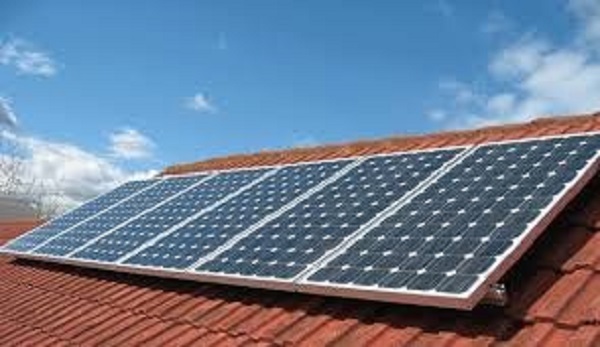
The report mentions the expansion of renewable energy as an option but it does not specifically refer to solar energy. Solar offers an escape route for users who are currently struggling to make ends meet and who even go into debt to do so.
But to make that change, GEBE must allow citizens to generate their own electricity with solar panels. I have personal experience with that solution, when we installed solar panels on the roof of the former Today-building near the Prins Bernhard Bridge. On sunny days, the meter was running backwards, thus creating a much lower GEBE-bill.
I can understand that such a solution would create problems of its own for GEBE: a lower turnover while its fixed costs remain the same. If enough people switched to solar power, GEBE would quickly go bankrupt.
The question is therefore: do we really need GEBE and its antiquated process of generating electricity? I am not sure but it seems to me that what we do need is at least a fundamental debate about energy-supply on our island. If consumers are unable to pay their bills, or even go into debt to make ends meet, we are slowly but surely moving towards the abyss anyway.
We should not let it come so far that people go bankrupt to keep GEBE going, but at the same time I realize that our country needs a national producer of energy.
This situation is bigger than GEBE. It is easy to complain and it is easy to say that somebody got to do something but if nobody stands up to say what we should do, we are getting nowhere.
In the meantime, our government is caught between a rock and a hard place: should it subsidize GEBE so that the company can survive or should it subsidize citizens who are willing to invest in solar energy?
###
Related articles:
Online survey returns predictable results about concerns regarding NV GEBE
Infographic with survey results >>>
###
ADVERTISEMENT