Advertisement





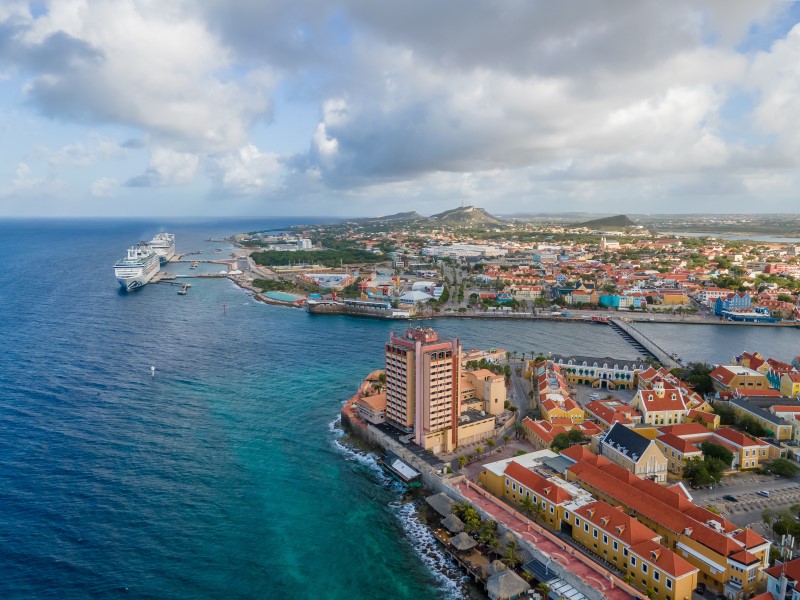
PHILIPSBURG — Five years ago, Arjen Alberts completed a thesis about the effect of the tourism industry on the islands of Aruba and S. Maarten. His conclusion was a clear warning to local decision makers: the tourism economies on these islands exceeded their carrying capacity and no longer show any increase in productivity. Now the same topic has hit the much larger island of Curacao, where concerns have arisen about the seemingly unlimited construction of hotels.
“Up to what point do the growth of the hospitality sector really contributes to the prosperity and the wellbeing of the population?” is a question raised in an article published in the Antilliaans Dagblad. The concerns are about the increased development of hotels and resorts along the coast of the island.
This development has led to intense discussions among the local population. People wonder when enough is enough, they express concerns about their island’s identity and culture and they even ask whether Curacao is on its way to become the Torremolinos of the nineties.
Torremolinos was a Spanish fishing village that lost all of its charm under the pressure of tourism development. People in Curacao fear that their island is heading in the same direction if the uncontrolled development of hotels and resorts continues.
Referring to an earlier Tourism Masterplan, former Minister of Economic Development Eugene Ruggenaath says: “Do we want mass or quality? Backpackers or high spenders? If we do not establish that, the result will be uncontrolled growth.”
When life becomes too expensive and people cannot afford anymore to go and eat out, get stuck in traffic jams and are unable to buy a house, the question arises: who benefits from all this? “And what kind of tourism do we want for the next twenty years?” Ruggenaath adds.
The former minister emphasizes that diversification remains essential: “No only within sectors, but also within tourism; from stay-over to cruises and from eco-tourism to science tourism.”
The effect on the construction sector affects prices significantly. Architect David Bohorquez told Antilliaans Dagblad that construction prices have gone up from 2,850 guilders to between 4,500 and 5,500 guilders per square meter.
The expansion of tourism-oriented accommodation also puts pressure on the island’s infrastructure. High demand for electricity has already resulted in a blackout in August.
CHATA-director Anuschka Cova remains undeterred: “Tourism keeps the economy going; It represents 48 percent of gross domestic product. More than 20,000 people make a living off it. Without growth, Curacao has nothing.”
The construction frenzy furthermore puts pressure on the labor market There is a shortage of plumbers, electricians and carpenters.
Arjen Alberts noted this already five years ago in his thesis. “Johnson (1987) wrote about it: “The uncontrolled growth of the island has led to a massive influx of workers, the majority of whom come from other Caribbean islands.”
Albert’s thesis and the struggles Curacao is currently experiencing bring one question sharply into focus: Will local decision makers learn something from it and actually do something, or will they stubbornly keep focusing on the number of tourists that come to their island?
###
Related articles:
Article Antilliaans Dagblad: “No More Hotels?”
###
ADVERTISEMENT