Advertisement





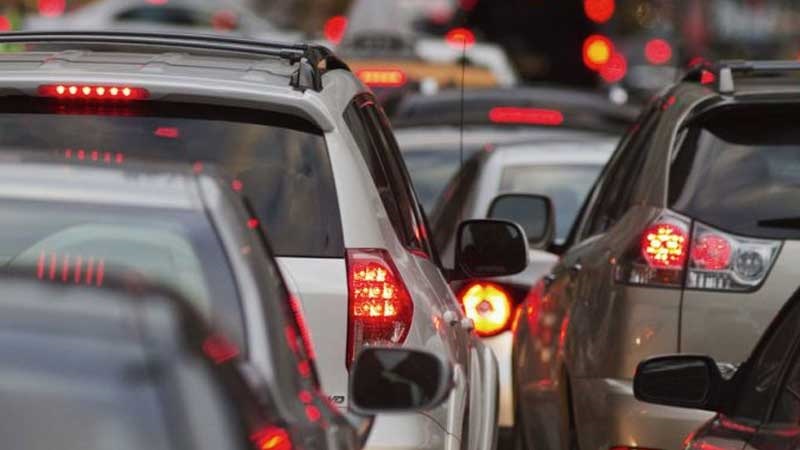
St. Maarten’s Traffic Crisis Reaches Breaking Point ~
~ With 40,000+ Vehicles on 37 Square Miles, Our Daily Paralysis is a Calculated Failure. The Cost? Millions Lost and Our Health at Risk ~
By Dr. Clifford A. E. Illis
PHILIPSBURG — On Tuesday, November 4, I landed at Princess Juliana International Airport. The distance to my destination in Cole Bay was just 5.2 miles. It took 67 minutes.
This was not an anomaly. It was the inevitable result of a simple, terrifying equation documented by local business and sector analyses: over 40,000 registered vehicles operating on an island of just 37 square miles. Reports from the St. Maarten Hospitality & Trade Association (SHTA) and other sector bodies consistently highlight this staggering vehicle count against a population hovering around 50,000. This gives St. Maarten a vehicle-to-person ratio approaching one-to-one, a statistic that places us among the most congested places on earth. My hour-long crawl was not bad luck; it was the daily, predictable arithmetic of a system pushed far beyond its limits.
We have discussed traffic as a nuisance for a generation. The data confirms it is a full-blown economic and public health emergency. The studies have been done, the bottlenecks are infamous, and the cost of inaction compounds every single day we fail to act.
The Documented Toll: More Than Wasted Time
The economic cost, while staggering, can be quantified. Applying regional Caribbean economic models—like those referenced in Eastern Caribbean Central Bank and Caribbean Development Bank infrastructure assessments—to our reality suggests that chronic congestion is likely draining 1-3% of our GDP annually. This translates to millions of dollars literally evaporating in exhaust fumes. This hemorrhage manifests as:
Lost Productivity: Delivery trucks idling, skilled workers late, tourists spending vacation time in traffic.
Operational Waste: Taxis and company fleets burning fuel to go nowhere, businesses forced to inflate prices to absorb unpredictable logistics.
The Health Burden: While comprehensive local air quality monitoring is limited, environmental and public health advisories from regional bodies like the Caribbean Public Health Agency (CARPHA) consistently link chronic traffic exposure to increased respiratory and cardiovascular risks. The simmering stress of daily gridlock, a known psychological burden, is the unseen passenger in every car.
A Legacy of Paralysis: Data on the Shelf, Cars on the Road
Our crisis is not due to a lack of analysis but a surplus of inaction, as decades of reporting in The Daily Herald and community forums like SXM Talks have chronicled.
The “Matrix System,” a smart traffic light network promised as a swift, software-based fix and frequently cited in government infrastructure plans since the early 2010s, remains in perpetual partial implementation—a decade-old symbol of stalled momentum.
Public Transport is statistically irrelevant as an alternative. The informal minivan system, described in transport sector reviews as “unstructured and unreliable,” lacks the capacity to meaningfully reduce vehicle counts. The result? Car dependency remains near 100%.
The Infrastructure Chasm: The most cited long-term solution—a flyover or bypass for the airport bottleneck—has been a line item in unfunded government master plans and Dutch-funded studies (such as the ‘St. Maarten Mobility Plan’ frameworks) for over 15 years. Its price tag, consistently estimated in the tens to hundreds of millions in these very reports, is routinely used as a reason for indefinite delay. Meanwhile, the economic and social cost of the status quo silently eclipses that figure.
The Inevitable Question: When Do The Numbers Force Action?
An island cannot grow. Our road network has not meaningfully expanded. Yet, as Central Bureau of Statistics data trends show, vehicle registration continues unabated. The logic is a downward spiral: Fixed land + rising population & tourism + increasing vehicles = guaranteed permanent gridlock.
We are not approaching a theoretical breaking point. We are living it. The line between “bad traffic” and “systemic failure” is crossed when the data shows the cost of inaction exceeds the investment required for a solution. By every metric—economic, environmental, social—the research indicates we crossed that line years ago.
A Data-Driven Demand for a Traffic Action Plan
We must move from chronic complaint to a binding, funded, and transparent Traffic Action Plan, with accountability tied to each phase. This plan must synthesize the existing studies gathering dust on shelves.
IMMEDIATE (Next 12-24 Months): Publicly release and act on the completed traffic studies already in government possession. Fully activate and optimize the long-promised Matrix System. Enforce existing laws against road-blocking parking and “tender truck” violations, a persistent issue highlighted by the SHTA and police traffic reports.
MEDIUM-TERM (1-3 Years): Formalize public transport based on the models proposed in various development bank-funded feasibility studies. Implement pilot dedicated lanes on critical corridors like the A. Th. Illidge Road. Begin a serious, public feasibility study for the most critical bypass, with the clear funding models that past reports have suggested.
LONG-TERM (3-7 Years): Break ground on prioritized infrastructure, funded through a dedicated blend of tourism revenues, green/development loans, and public-private partnerships—mechanisms already outlined in regional infrastructure guides.
This requires an Emergency Traffic Summit—convening government, the SHTA, Chamber of Commerce, taxi associations, and engineers—with a 90-day mandate to synthesize the decades of existing data and proposals into a single, costed, and prioritized roadmap.
Our small size is our last, best advantage. We can pilot solutions and see results faster than any large nation. But first, we must choose to value the millions in lost GDP and the collective health of our citizens over the comfort of the status quo.
The data is clear. The cost is mounting. The time for action was yesterday. The next best time is now.
###
Related articles:
Follow the discussion online on Facebook>>>
StMaartenNews.com archive on news articles about traffic jams>>>
###
ADVERTISEMENT