Advertisement





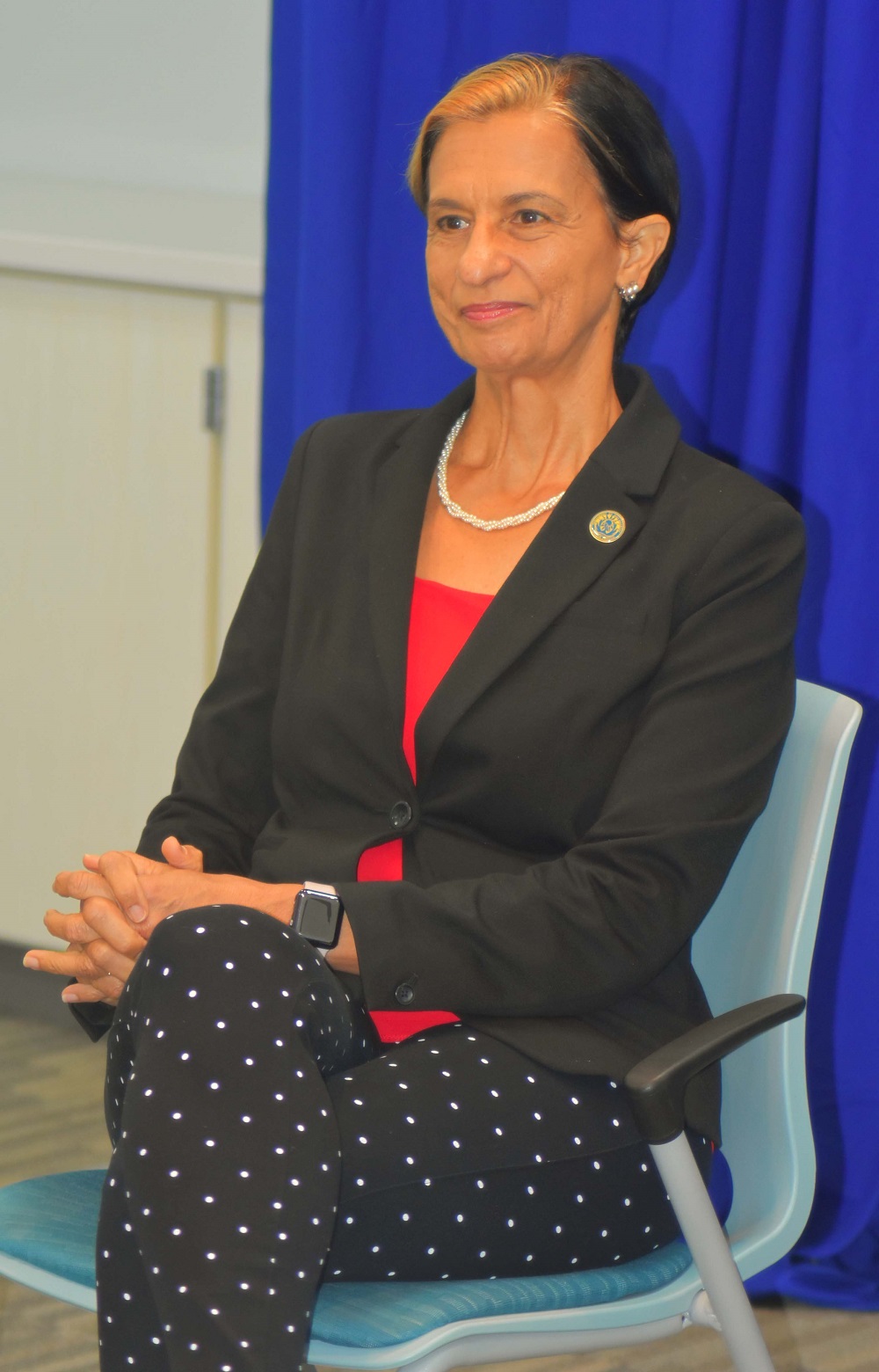
PHILIPSBURG — President of Parliament Sarah Wescot-Williams says the recent call by Members of Parliament for a parliamentary meeting on the future of the monetary union between Curaçao and Sint Maarten is rooted primarily in concerns about the governance of the Centrale Bank van Curaçao en Sint Maarten (CBCS).
In an exclusive response to questions from StMaartenNews.com, Wescot-Williams explained that the issue has gained urgency following ongoing disagreements over the appointment of leadership within the Central Bank’s Supervisory Board.
The controversy has been closely linked to the recent nomination of St. Maarten attorney Jairo Bloem by the Minister of Finance as a candidate for chairperson of the Supervisory Board. The nomination reignited debate about governance procedures at the Bank and the broader functioning of the monetary union.
Chairmanship Dispute Brings Monetary Union Debate to the Fore
According to Wescot-Williams, the statutory process for appointing board members and the chairperson of the Central Bank has been contentious for years, sometimes even requiring court intervention.
The charter governing the Central Bank establishes parity between Curaçao and Sint Maarten, meaning each country appoints three members to the Supervisory Board, who then jointly propose a chairperson to complete the seven-member board.
However, political discussions have often centered on an informal understanding about whose “turn” it is to nominate the chairperson — an arrangement that was never formally codified in law.
“The so-called rotation is a gentleman’s agreement,” Wescot-Williams said, emphasizing that the formal appointment procedures are clearly defined in the Central Bank charter.
Recent disagreements over this process, she noted, have pushed a broader question to the forefront: the long-term viability of the monetary union itself.
Debate Comes After Introduction of the Caribbean Guilder
The renewed debate comes at a particularly sensitive moment for the monetary union, as both Curaçao and Sint Maarten have only recently completed the transition to their new shared currency, the Caribbean guilder (XCG).
The Caribbean guilder officially became legal tender in the monetary union on March 31, 2025, replacing the Netherlands Antillean guilder that had been used for decades.
Until the current governance dispute emerged, there appeared to be broad political and institutional support in both countries for the transition to the new currency. As Wescot-Williams noted, the current discussion about the viability of the monetary union was “somewhat unexpected because all were on board for the transition to the XCG.”
The Central Bank of Curaçao and Sint Maarten (CBCS) remains responsible for issuing the currency, supervising commercial banks and safeguarding financial stability across the two countries.
While the introduction of the Caribbean guilder has thus far proceeded without major disruption, the ongoing dispute over governance at the Central Bank has brought renewed attention to the broader question of how the monetary union will function in the years ahead.
Parliamentary Meeting Requested
Wescot-Williams confirmed that the request for a parliamentary meeting originated from the Democratic Party faction together with other Members of Parliament who believe the issue must be addressed proactively.
Because such a request must formally be submitted through the Chairperson of Parliament, the request was transmitted through her office in that capacity.
“The Democratic Party and other Members supporting this request believe we must address the issue proactively,” she said.
The intention of the meeting is to engage the Minister of Finance in a discussion about the state of the monetary union and St. Maarten’s preparedness for any future developments.
CBCS Governance Impasse Lies at the Heart of the Debate
While the public discussion has recently expanded to the broader question of the monetary union’s future, the immediate issue that brought the matter to Parliament is the prolonged governance impasse at the Central Bank of Curaçao and Sint Maarten (CBCS).
The Supervisory Board of the Central Bank has been operating without a formally appointed chairperson for several years, a situation that has complicated decision-making at the institution responsible for safeguarding the financial systems of both countries.
The latest controversy arose following the nomination of attorney Jairo Bloem by St. Maarten’s Minister of Finance as a candidate for chair of the Supervisory Board. That nomination quickly became the subject of political and legal debate about whether the procedures outlined in the CBCS charter had been properly followed.
Under the CBCS charter, the process for appointing the chairperson is intended to protect the independence of the Central Bank. The Supervisory Board first recommends a candidate, after which the Ministers of Finance of Curaçao and St. Maarten jointly nominate the candidate for appointment by national decree.
However, disagreements over how that process should unfold — combined with unresolved appointments on the Supervisory Board itself — have left the institution without permanent leadership at the supervisory level.
For Wescot-Williams, this governance situation is precisely why Parliament must engage the issue now.
Her position, she explained, is that St. Maarten should first ensure that its own representation on the Supervisory Board is complete and functioning properly. Only then can the board effectively carry out its responsibility to recommend a chairperson and restore stability to the institution.
At the same time, she acknowledged that the dispute has inadvertently triggered a wider discussion about the future of the monetary union itself — a discussion she believes must be approached carefully and deliberately.
Priority Should Be Completing the CBCS Board
While the public debate has focused on the chairmanship dispute, Wescot-Williams stressed that the more immediate priority should be ensuring that the Supervisory Board of the Central Bank is fully constituted.
Her advice to government has been consistent: St. Maarten should first ensure that its three board positions are filled, after which the board can proceed with identifying a qualified candidate for chairperson.
She also suggested that once a candidate receives the support of at least five of the six board members, the name should first be informally discussed with the Ministers of Finance of both countries before the formal nomination process begins.
This approach, she said, could prevent political disagreements after a candidate is officially proposed.
Avoid Controversy Around the Central Bank
Despite the political tensions surrounding the appointment process, Wescot-Williams warned against allowing the issue to undermine confidence in the Central Bank itself.
“The last thing we need is controversy surrounding our Central Bank,” she said, noting that the institution is responsible for safeguarding the entire financial system of both countries.
Regardless of future decisions about the monetary union, Curaçao and Sint Maarten must continue working together for now to ensure the Bank functions effectively, she added.
Monetary Union Requires Careful Deliberation
At the same time, Wescot-Williams acknowledged that the question of the monetary union’s long-term future is a legitimate topic for discussion.
Both countries, she said, should carefully analyze whether they wish to continue the current arrangement or eventually pursue independent monetary systems.
Such decisions, however, should not be driven by political reactions or short-term disputes.
“This is a complex and fundamental issue that requires thoughtful and measured consideration,” she said.
St. Maarten, she added, must ensure it develops the necessary institutional capacity and structures locally so the country is not caught unprepared if major changes in the monetary framework occur.
Coalition Agreement Also Highlights CBCS Issue
Wescot-Williams also pointed to the governing agreement of the current coalition — consisting of URSM, DP, PFP and SAM — which identifies the Central Bank and the monetary union as issues requiring careful review.
Under that agreement, recent decisions taken by the CBCS are to be examined and the overall benefits of the monetary union for St. Maarten evaluated.
For Wescot-Williams, this agreement forms an important basis for the current discussion.
“In the absence of support for previously reached informal understandings,” she said, “we should fall back on what is regulated — namely the bank charter.”
A Discussion Just Beginning
For now, the request for a parliamentary meeting signals the start of what could become a broader national discussion about the future of the monetary union and the governance of the shared Central Bank.
While the immediate issue concerns the appointment of leadership within the CBCS, the underlying debate touches on far larger questions about economic cooperation, financial stability and St. Maarten’s monetary future.

COMMENTARY
A Debate That May Shape the Island’s Monetary Future
For now, the immediate issue before Parliament concerns the governance of the Central Bank and the need to resolve the ongoing stalemate over the composition and leadership of the Supervisory Board.
But the broader discussion now unfolding may extend far beyond the appointment of a chairperson.
As the dispute surrounding the nomination process has demonstrated, disagreements over governance procedures at the Central Bank have the potential to trigger deeper questions about the long-term structure of the monetary union itself. The controversy surrounding the proposed nomination of attorney Jairo Bloem, for example, highlighted tensions between the legal procedures outlined in the CBCS charter and the political realities surrounding appointments to the Bank’s leadership.
Wescot-Williams emphasized that these issues should be approached deliberately and carefully, noting that St. Maarten must take the time to analyze developments affecting the Central Bank and determine what arrangements best serve the country’s financial stability.
The upcoming parliamentary discussion, she indicated, should therefore focus not only on resolving the current governance impasse but also on ensuring that St. Maarten is institutionally prepared for whatever direction the monetary union may take in the future.
###
Related article:
MPs Call for Urgent Parliamentary Meeting on Future of Monetary Union with Curaçao
###
ADVERTISEMENT