Advertisement






Saint-Barthélemy is in the midst of one of the most far-reaching administrative reforms in its recent history: a comprehensive street-naming and address-standardization project that will assign an official address to every road and every individual property on the island. While the initiative is often framed as a technical upgrade to improve navigation, emergency response, and mail delivery, President of the Collectivité territoriale Xavier Lédée says its impact will extend far beyond logistics.
At its core, the project is also expected to bring greater transparency to the island’s housing and rental market—an increasingly sensitive issue on an island where housing is scarce, demand is high, and informal arrangements have long flourished.
“Once every property has an official address, there is much greater clarity,” President of the Collectivité territoriale Xavier Lédée said. “You know what exists, where it exists, and how it is being used.”
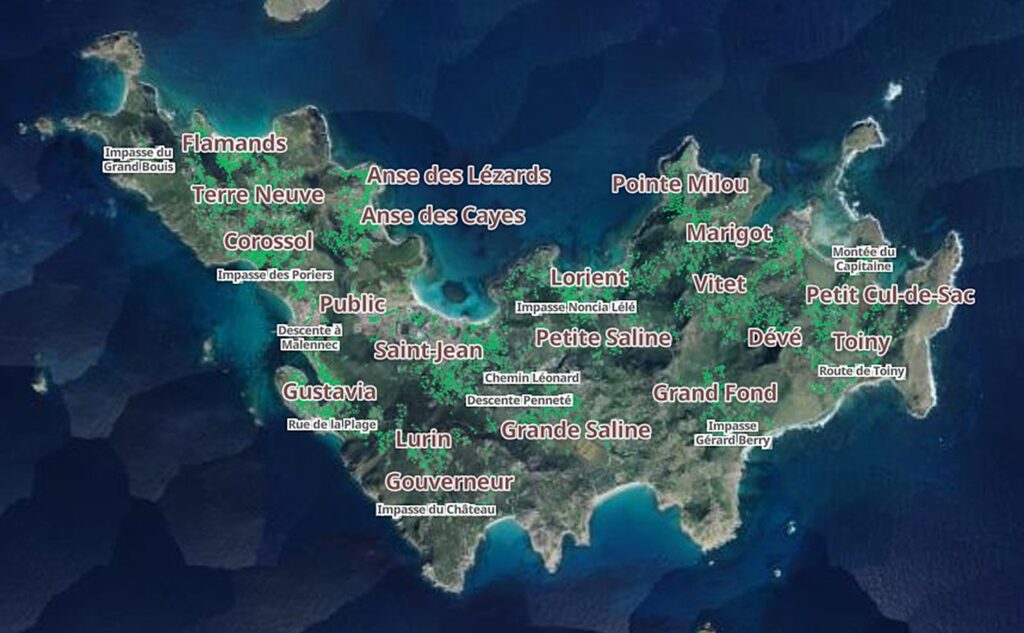
Often referred to locally as le grand chantier de l’adressage, the addressing project seeks to formalize street names and numbering across Saint-Barthélemy. Historically, many roads had no official names, while properties were identified through informal directions, landmarks, or family names—methods that worked within close-knit communities but posed challenges for emergency services, delivery companies, visitors, and public administration.
Under the new system, streets are being officially named—frequently following consultations with residents to reflect local history, geography, or cultural heritage—and each residence is assigned a precise address with a street name and number.
The island’s Base Adresse Locale (BAL) was officially launched online on February 28, 2024, listing hundreds of streets and several thousand individual addresses. Public meetings have been held in various neighborhoods, allowing residents to weigh in on street names and ensuring that traditional place names are preserved.
Names that resonate
Officials stress that the project is not merely administrative. By anchoring addresses to history and place, the initiative also reinforces Saint-Barthélemy’s identity.
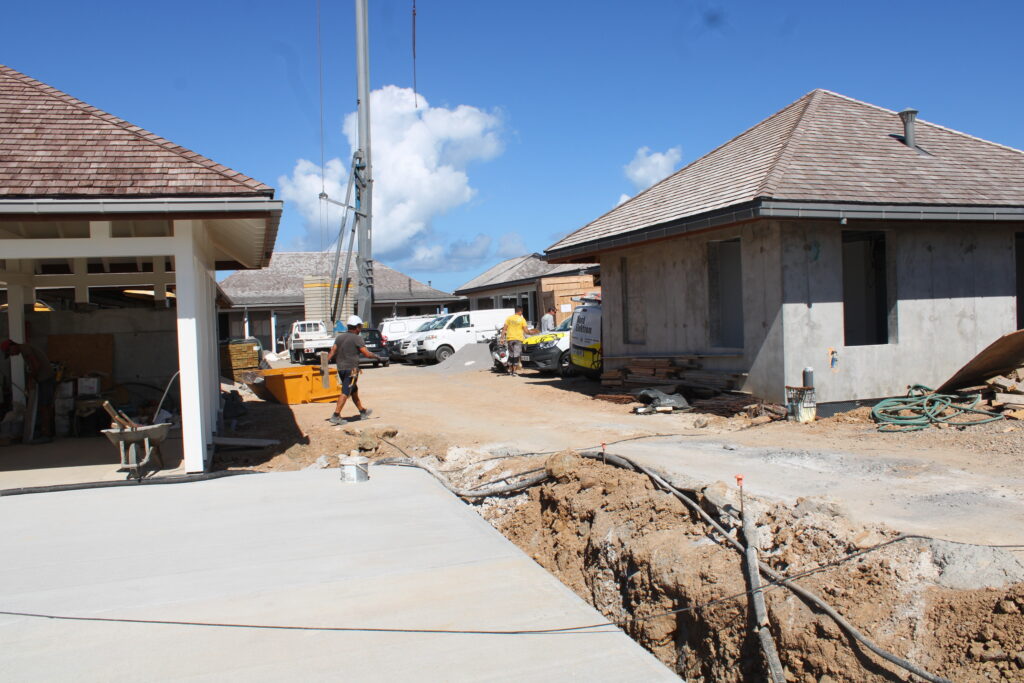
Located along the inner harbor in Gustavia, just steps from the Collectivité and the Wall House Museum, Rockefeller Quay sits at the heart of daily life in the capital. Its name dates back to the late 1950s, when David Rockefeller fell in love with the island, purchased land in Colombier, and helped put St. Barth on the map for an international elite—becoming part of the island’s modern mythology.
For decades, however, the site itself was little more than an unremarkable stretch of waterfront with a shed. In 2017, the Collectivité acquired the property for 10 million euros and undertook a redevelopment completed in May 2025, transforming the area into a modern public space featuring a reflecting pool, a Maison des associations, and a new fish market—blending historical symbolism with everyday island life.
Rental market in the spotlight
Beyond its practical benefits, the addressing project has significant implications for the rental market. With each property formally identified, authorities will have a clearer overview of which homes are being rented—whether short-term or long-term—on an island where housing availability, particularly for workers, has become a growing concern.

While the Collectivité does not regulate rental prices, President Lédée is clear that certain practices are illegal. “Renting without a contract, or suddenly increasing rental prices without justification, is not allowed,” he said, responding to questions about the shortage of temporary housing for workers arriving from St. Maarten and other nearby islands.
The shortage has become especially acute in sectors such as construction, hospitality, and public services, where employers increasingly struggle to house staff.
“I see a role for the Collectivité in helping to match responsible tenants with reliable property owners,” Lédée said. “We need to put an organization in place that reinforces legality and improves oversight of the rental market.”
Such a mechanism, he explained, would not involve setting prices, but rather ensuring transparency, contractual compliance, and fair practices.
Elevating safety and standards
Local urban-planning regulations also play a central role in shaping development on the island, dividing Saint-Barthélemy into zoning categories—such as urban, residential, and natural areas—which determine how much land can be built upon and what types of structures are permitted. Discussions about zoning reforms are ongoing; however, with just one year remaining before the next elections, Lédée does not expect new spatial-planning measures to be finalized before the end of his term. “This will be the mandate of the next administration,” he said.
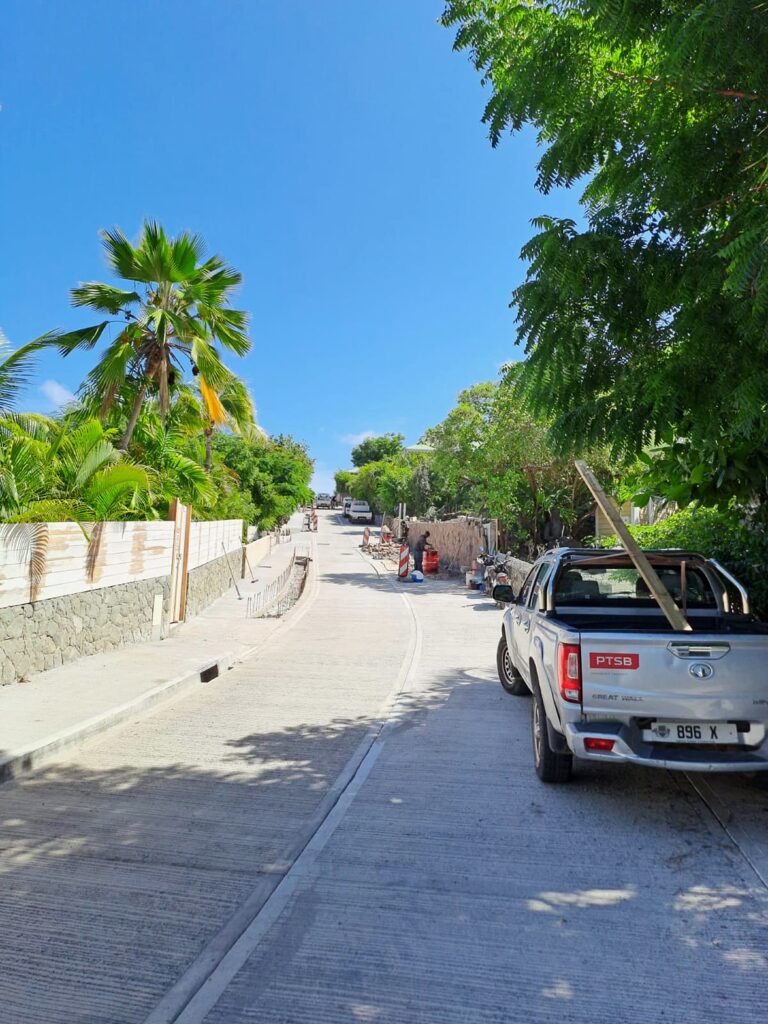
In the meantime, pedestrian safety is a priority. New roads will include sidewalks wherever possible, often negotiated with property owners in exchange for boundary walls.
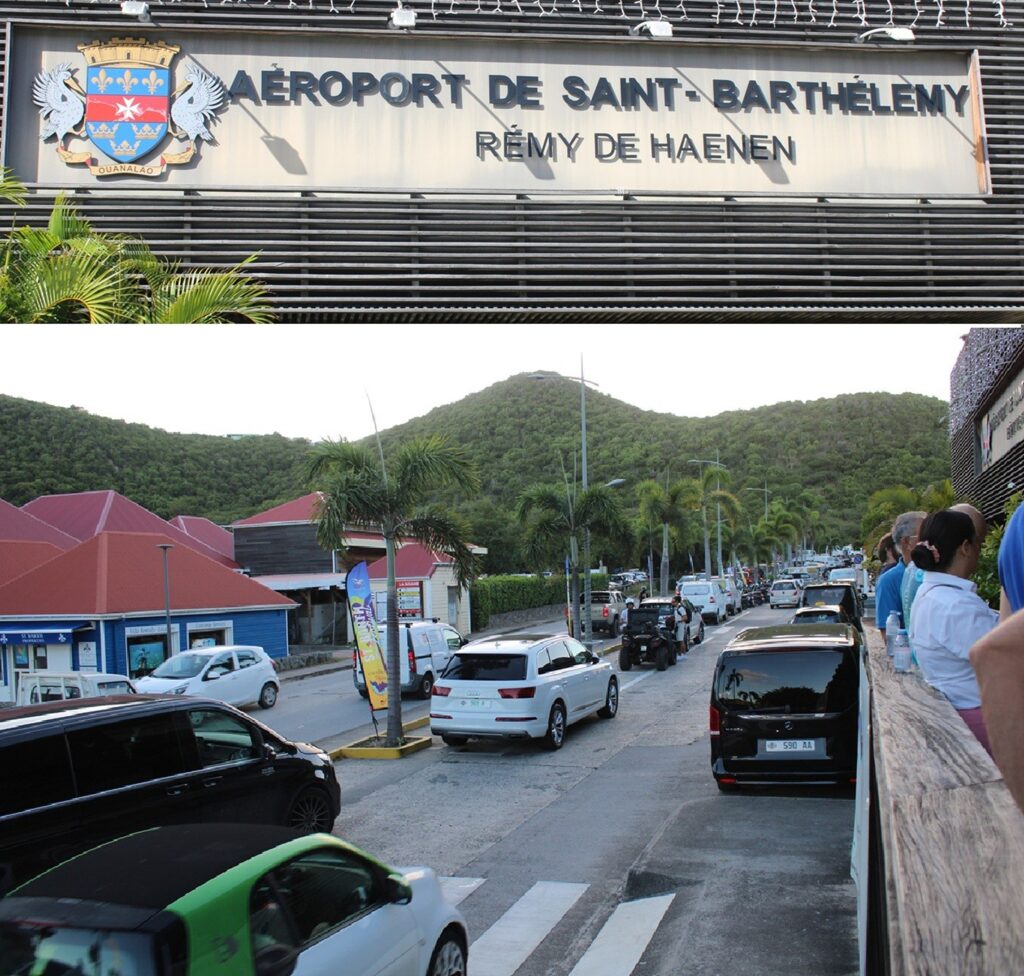
Parking at Rémy de Haenen Airport is also under review. “Rental companies occupy most of the available spaces,” Lédée said. “The police are preparing a plan to allow only two spots per rental company, reserving space for arriving passengers, private vehicles, airport staff, and scooters to prevent congestion.”
The Collectivité has also inaugurated a new car-impound facility (fourrière) in La Saline, capable of holding around 110 vehicles, to improve traffic enforcement and road safety.
In addition, the Collectivité has introduced a free shuttle service linking Saint-Jean and Gustavia, launched on December 1 as part of an eight-month pilot programme. Operating daily from 6am to 9pm, with buses running at 15- to 30-minute intervals, the service is intended to ease traffic congestion and relieve parking pressure in the capital.

Authorities hope the initiative will encourage residents to leave their vehicles outside the town centre while preserving business for taxi operators. “This service is aimed at locals, who are generally not the people using taxis,” President Xavier Lédée said. “We are careful not to create competition with taxi drivers or take away their livelihood.”
###
ADVERTISEMENT