Advertisement





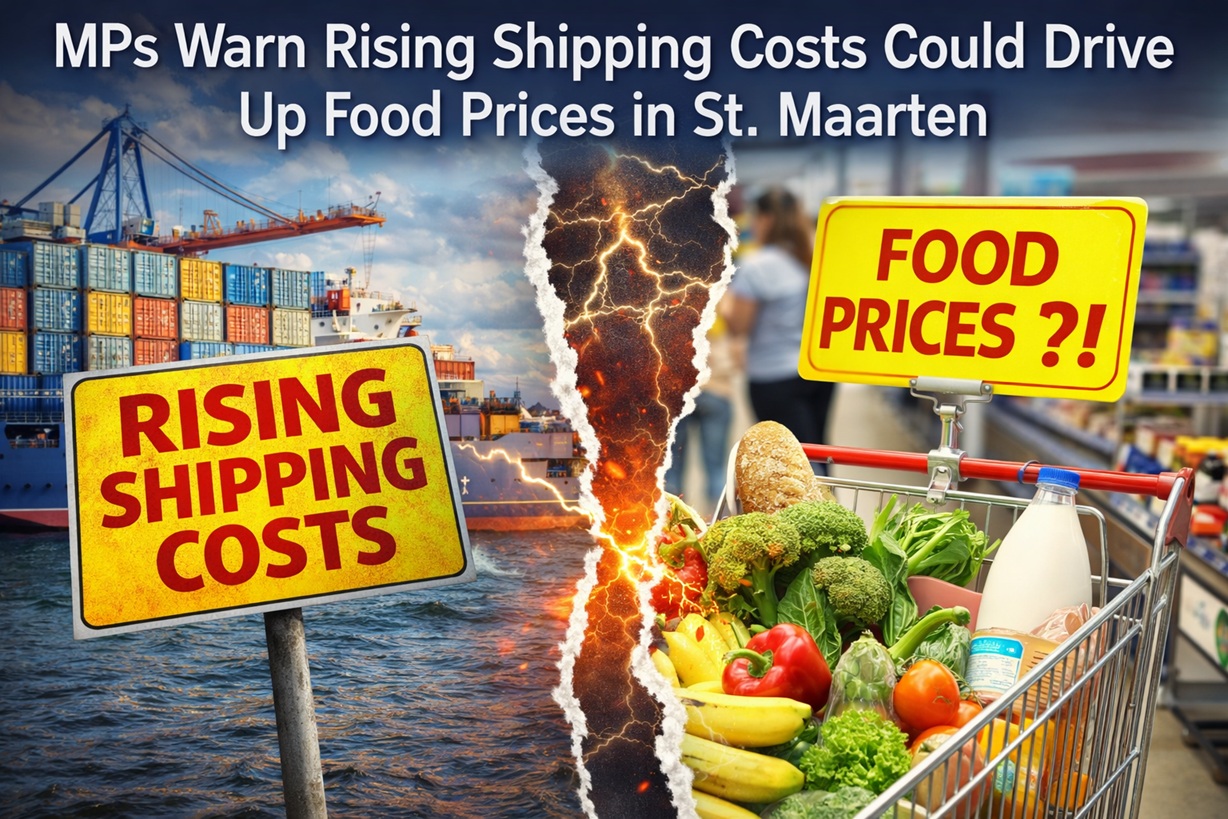
PHILIPSBURG — Member of Parliament Francisco Lacroes (UP Party) is calling on the Government of St. Maarten to urgently assess the impact of rising international shipping costs, warning that new freight surcharges could soon translate into higher food prices and further pressure on the island’s cost of living.
Lacroes issued the call following a recent notice from shipping company King Ocean Services, which announced substantial increases in bunker surcharges on cargo shipments between United States ports and the Caribbean beginning April 12, 2026.
According to the notice, the surcharge on a standard 20-foot cargo container will increase from approximately US$200 to US$700, while the surcharge on a 40-foot container will rise from about US$400 to US$1,400. Refrigerated containers used to transport perishable goods such as meat, dairy products and vegetables will also see similar increases.
Potential Impact on Food Prices
While the surcharge adjustment may appear to be a technical change in freight pricing, Lacroes warned that it could have direct consequences for consumers.
“These increases will inevitably translate into higher prices for food and essential goods across our island,” the MP said in a statement.
St. Maarten is particularly vulnerable to shipping cost increases because of its heavy dependence on imported goods. Estimates suggest that between 90 and 95 percent of the island’s food supply is imported, much of it arriving through distribution networks in the United States.
When freight costs rise, importers must absorb higher shipping charges, which are typically passed along the supply chain to wholesalers, retailers and eventually consumers.
Import Dependency Highlights Vulnerability
Trade figures illustrate the scale of this dependency. In 2022, St. Maarten imported goods valued at approximately US$1.1 billion, with more than 77 percent of those imports originating from the United States.
This close reliance on external supply chains means that fluctuations in international shipping costs can quickly influence the cost of living on the island.
Economists have long noted that small island economies like St. Maarten are highly exposed to global transportation costs, particularly when it comes to food imports.
Government Asked to Assess Impact
Lacroes is now urging the government to closely examine the situation and determine what measures may be necessary to protect consumers.
He specifically called on the Ministry of Tourism, Economic Affairs, Transport and Telecommunication (TEATT) and the Ministry of Finance to assess the potential effects of the freight increases on local supply chains and retail prices.
Among the questions the MP believes should be addressed are:
- How will the increase in shipping surcharges affect retail food prices on the island?
- What monitoring mechanisms are in place to track price changes along the supply chain?
- Are there safeguards to prevent excessive markups by distributors or retailers?
- What long-term strategies are being considered to strengthen St. Maarten’s food security?
Pressure on Household Budgets
The issue comes at a time when many households are already facing rising living costs.
Food prices, utilities and housing expenses have placed increasing strain on family budgets in recent years, and Lacroes warned that further price increases could disproportionately affect working families, seniors and vulnerable residents.
“Shipping costs may originate far beyond our shores, but their consequences are felt here at home,” Lacroes said.
“Ensuring that those consequences do not place an unfair burden on the people of St. Maarten must remain a priority.”
Broader Economic Implications
Beyond consumer prices, the issue also raises broader questions about St. Maarten’s economic resilience and its reliance on imported goods.
As a small island with limited agricultural capacity and land availability, St. Maarten remains highly dependent on external trade and shipping networks.
For policymakers, developments such as rising freight costs underscore the importance of long-term strategies aimed at strengthening supply chain resilience and exploring ways to reduce economic vulnerability.
The government has not yet issued an official response to Lacroes’ concerns.
###
Other political news: MPs Call for Urgent Parliamentary Meeting on Future of Monetary Union with Curaçao
###
ADVERTISEMENT