Advertisement





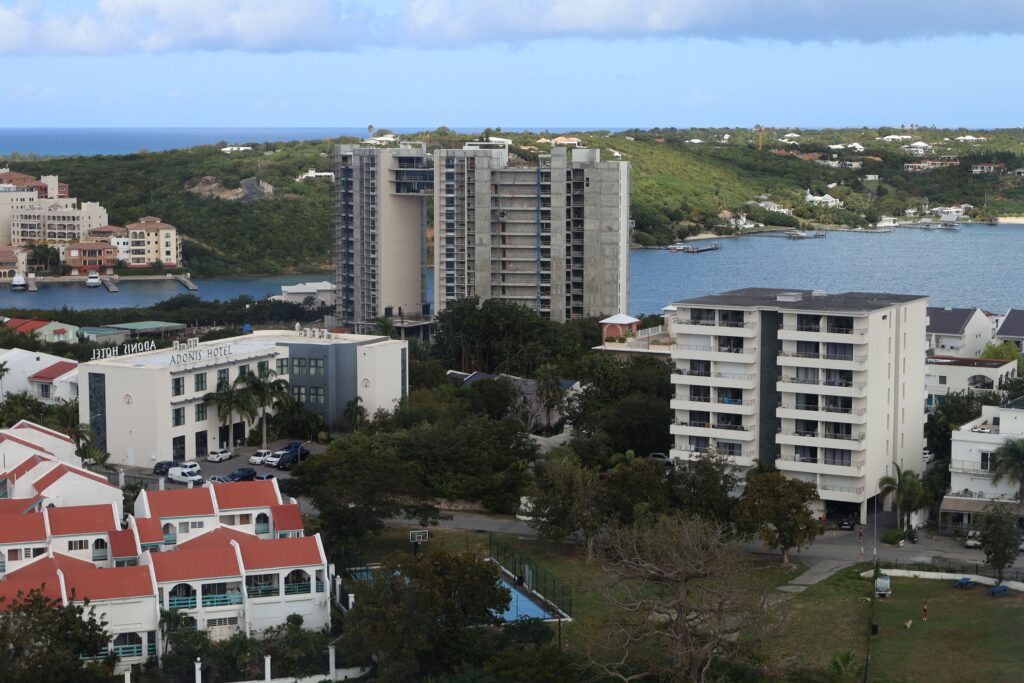
Minister of Public Housing, Spatial Planning, Environment and Infrastructure (VROMI) Patrice Gumbs, representing the Party for Progress (PFP), this week defended continued large-scale development on St. Maarten even as he acknowledged infrastructure has lagged far behind growth and repeated calls to “pause” major projects.
At Wednesday’s Council of Ministers press briefing, Gumbs said: “Our economy depends on tourism and construction,” in response to a question about whether the country should consider halting development to catch up on roads, drainage, sewage, traffic management and other services.
The question stemmed from a recent economic development conference in Bel-Air where participants highlighted what they described as a growing gap between rapid growth and inadequate infrastructure. Comparisons were drawn to Aruba’s competition authority — which once examined alleged price-fixing on real estate commissions — and some attendees suggested St. Maarten needs stronger regulatory frameworks. Gumbs said he was aware that real estate commissions are largely unregulated locally, but he had not followed the specific conference discussions.
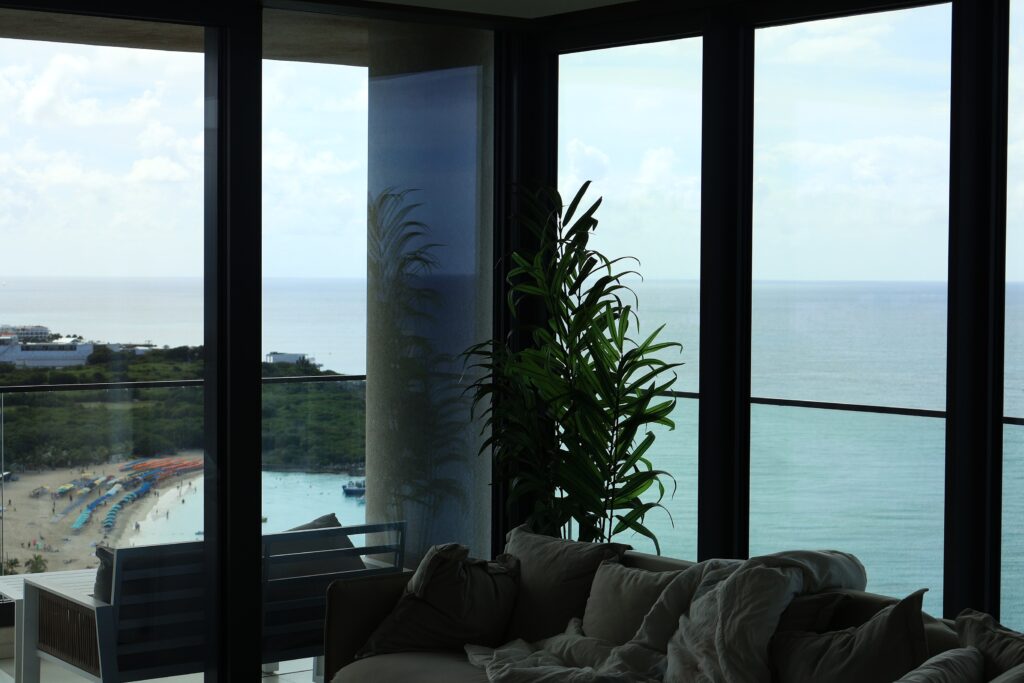
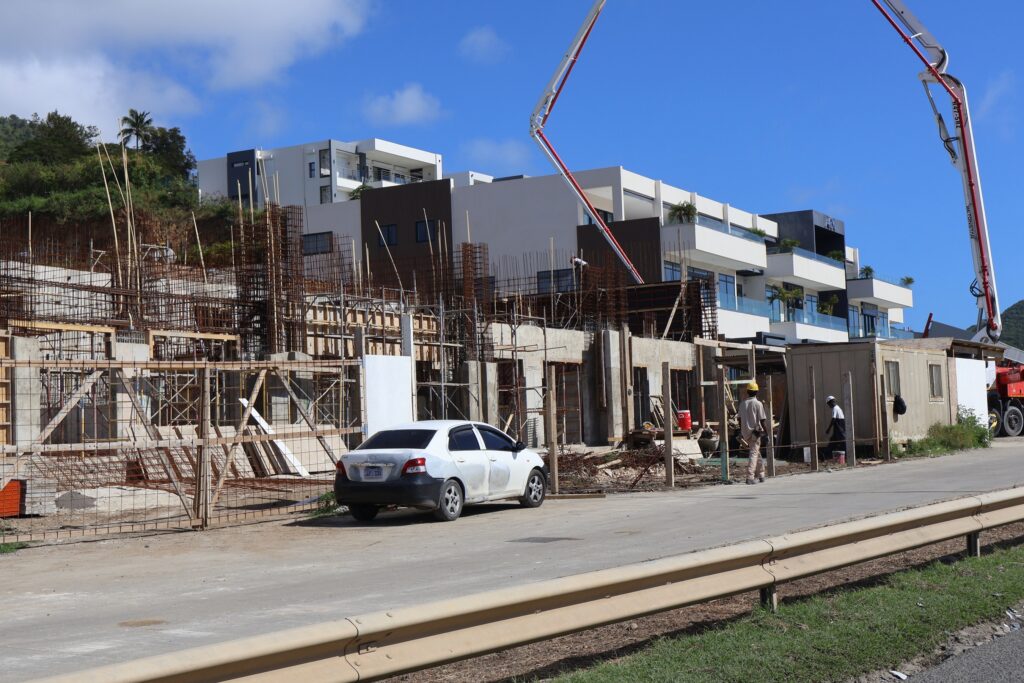
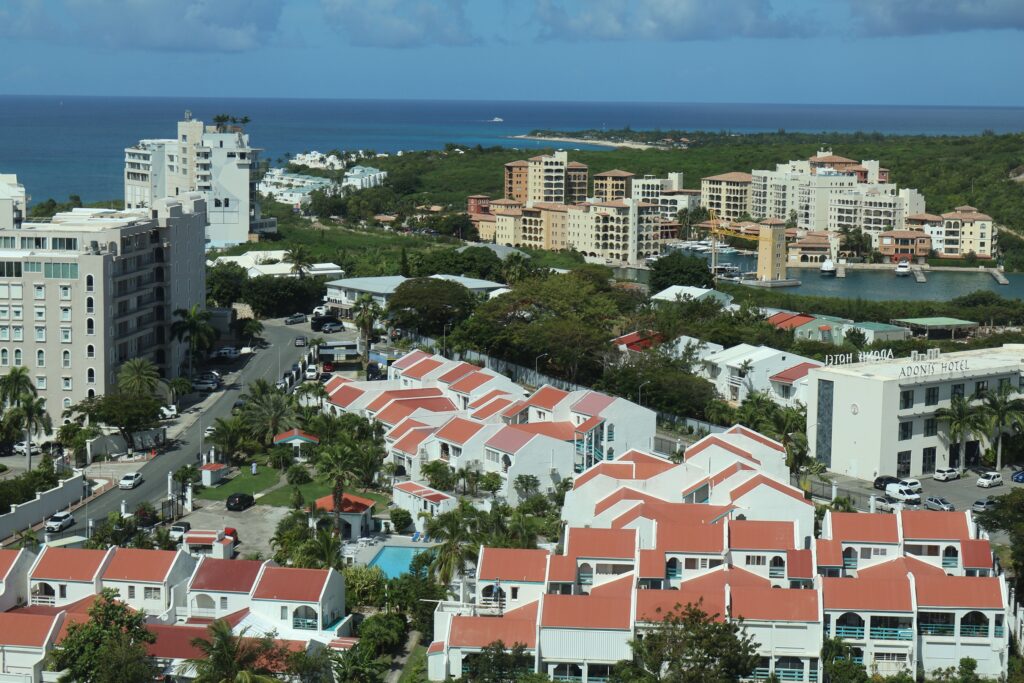
The broader complaint has been consistent: infrastructure is overwhelmed by ongoing development, particularly large condominium and hotel projects, leaving residents to deal with daily gridlock, flooding and stretched utilities.
Gumbs acknowledged the problem, but sought to shift responsibility beyond the government. “I completely agree that we have not kept up,” he said, before adding: “Government doesn’t build condos. Government doesn’t build the constructions. The population does.”
Minister Patrice Gumbs said he is not opposed to high-rise developments in principle, but stressed that their impact on infrastructure must be carefully managed. “A 10- or 15-storey building has a much greater impact on sewage, drainage, and the space around it,” he said.
Gumbs emphasized that high-rises should only be permitted if developers contribute to mitigating these impacts, noting, “If construction continues, there must be mechanisms for developers to contribute to social housing, affordable housing, and public infrastructure.”
PFP’s 2024 ‘Pause Button’ proposal
The argument contradicts an earlier position from the PFP leadership. In March 2024, PFP leader Melissa Gumbs — then a Member of Parliament — formally submitted written questions to the Ministers of Tourism, Economic Affairs, Transport and Telecommunication (TEATT) and VROMI asking whether pausing large commercial developments was being considered. She called for a “pause button” on major projects while protections for the environment and critical infrastructure were strengthened.
PFP leader Gumbs cited concerns about erosion affecting Simpson Bay Lagoon, damage to wetlands like Little Bay Pond and Red Pond, and the risk of degrading key tourism assets.
“At 16 square miles of finite land, it can’t be so crazy as to expect the pause button to be hit while these conversations around the actual protection of our environment and ecosystems are ironed out,” she said, emphasizing the need for stronger planning and safeguards before approving further large-scale projects.
Balanced growth vs. moratorium
In contrast to the 2024 proposal, Minister Patrice Gumbs this week argued against a blanket moratorium. “It’s very easy to say we’re going to pause development,” he said. “But if you stop tourism and you stop construction, you are touching the core of our economy.”
Instead, he advocated a balanced approach in which large developers are required to contribute directly to improvements in infrastructure and community needs. He suggested contributions should extend beyond roadworks to include drainage, sewage systems, sidewalks and even affordable housing.
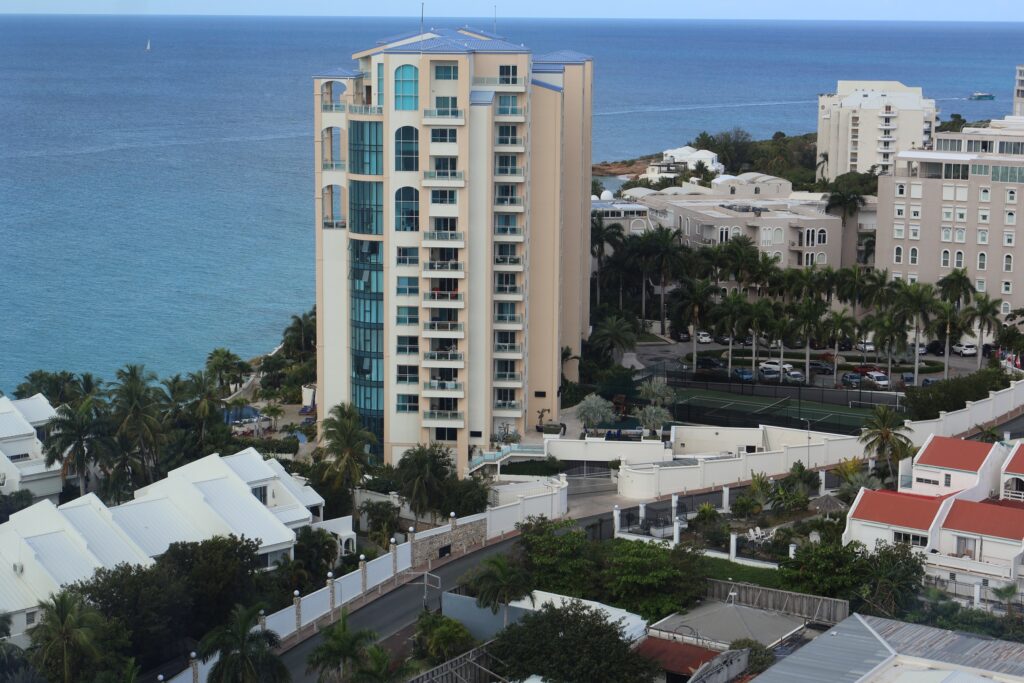
“The more condos you build, the higher the cost of housing and land becomes,” Gumbs said. “If construction continues, there must be mechanisms for developers to contribute to social housing, affordable housing and public infrastructure.”
Infrastructure capacity
VROMI Minister Gumbs said his ministry has been working for over a year on capacity studies to determine what the island can realistically accommodate. These studies are now being formalized. Discussions are also underway within the Council of Ministers about potentially controversial measures, including a moratorium on vehicle imports to relieve traffic congestion.
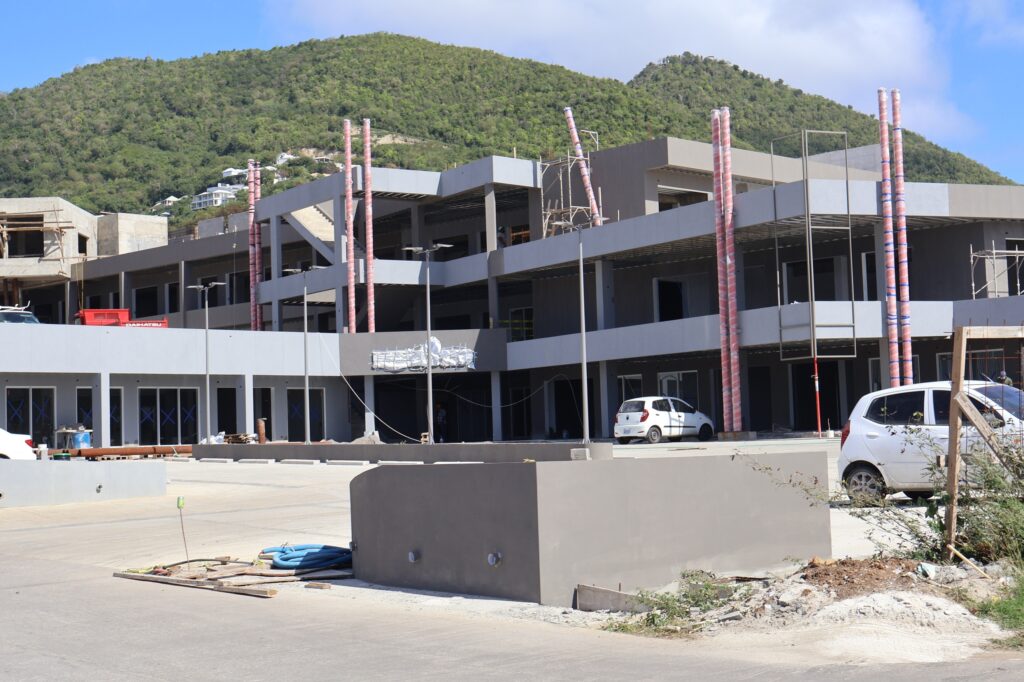
He also floated proposals to adjust road tax so heavier, higher-emission vehicles contribute more toward infrastructure and climate mitigation. “Why is someone driving a G-Wagon paying the same as someone driving a small i10?” Gumbs asked rhetorically.
###
ADVERTISEMENT