Advertisement





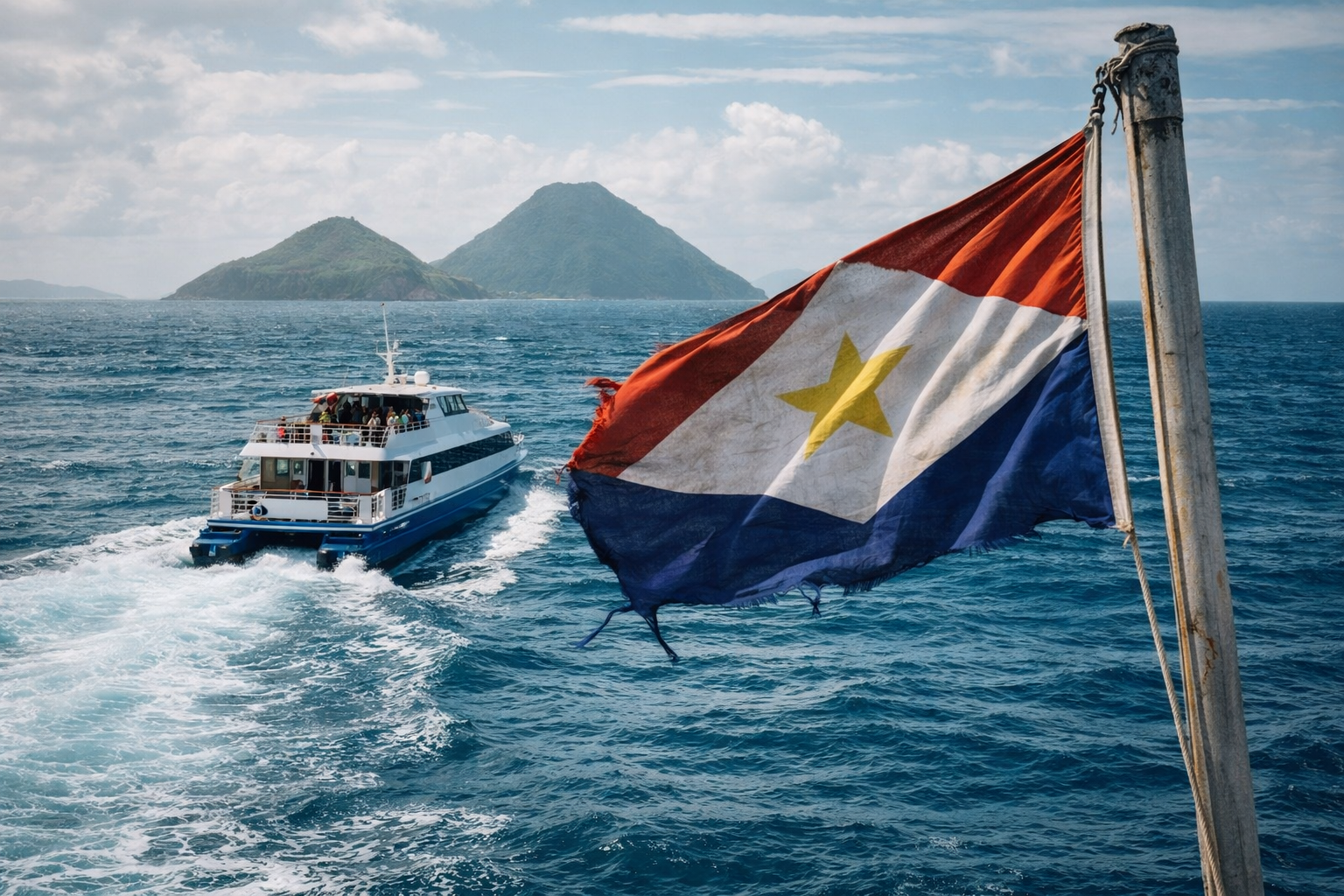
The discussion on Saba about the sale of The Edge says a lot more about us than it does about the ferry.
The reactions are predictable. Shock. Nostalgia. Frustration. And then, as always, the same question: who is going to fix this? Government? The Netherlands? Someone else?
But very few are asking the only question that actually matters:
Why aren’t we fixing it ourselves?
Let’s be honest for a moment.
For years, The Edge was not just a ferry. It was a lifeline—connecting Saba to St. Maarten in about 90 minutes, supporting tourism, mobility, and economic activity. And yet, like most lifelines in the Caribbean, it was not built on emotion. It was built on business.
And business follows one rule: if it no longer makes sense, it moves on.
So when people say, “The Edge had Saba at heart,” they are missing the point. No company operates out of sentiment. If the numbers worked, it would still be there.
Now here’s where the conversation becomes uncomfortable.
We love to say:
- “Government should step in”
- “The Netherlands should help”
- “We need subsidies”
But the reality is already staring us in the face.
The ferry service between these islands does not survive on its own. That’s why governments had to step in with Public Service Obligation agreements just to keep connectivity stable and affordable.
Even the Dutch government has had to allocate millions annually to maintain these connections because they are not commercially viable on their own.
So let’s stop pretending this is a simple “just start your own ferry” situation.
This is not a small business.
This is infrastructure.
And infrastructure comes with:
- High startup costs
- High operational risk
- Thin margins
- Dependence on external markets
Which brings us back to the real issue.
It’s not that Sabans don’t want their own ferry.
It’s that the model makes it extremely difficult to succeed without support.
And yet—this is where I agree with the underlying frustration in the discussion.
Because while the economics are complex, the mindset is even more problematic.
We have become too comfortable waiting.
Waiting for government.
Waiting for the Netherlands.
Waiting for someone else to solve problems that affect us directly.
That dependency mindset is more dangerous than the loss of any ferry.
Because once you accept that you cannot do it yourself, you will always be negotiating from a position of weakness.
Now, to be clear—this is not an argument for government to go out and buy boats. That usually ends badly. Nor is it realistic to expect a handful of local investors to take on all the risk alone.
But somewhere in between lies the real solution:
- Public-private partnerships
- Regional cooperation
- Structured, sustainable business models
Not emotion. Not politics. Not nostalgia.
Because crying over The Edge will not bring it back.
And blaming others will not replace it.
If anything, this moment should be a wake-up call.
Connectivity is not a luxury. It is the backbone of island survival.
And if you don’t control your backbone, someone else always will.
So the next time we ask,
“Why didn’t they inform us?”
Maybe we should also ask:
Why are we still waiting to take control of our own future?
###
ADVERTISEMENT