Advertisement





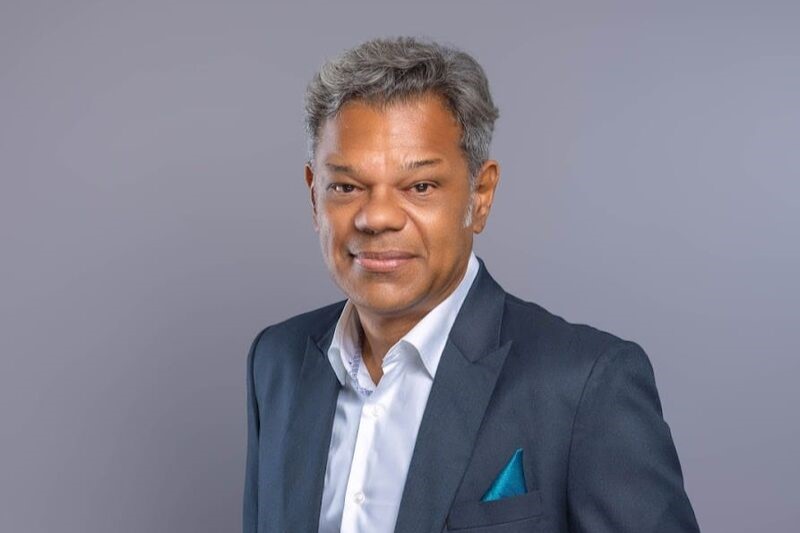
PHILIPSBURG-Prime Minister Dr. Luc Mercelina on Wednesday opened the Council of Ministers press briefing by addressing growing tensions within the monetary union between St. Maarten and Curaçao, emphasizing that recent developments surrounding the Centrale Bank of Curaçao and St. Maarten (CBCS) have intensified public and political debate on the future of the shared financial system.
The Prime Minister’s remarks come against the backdrop of an ongoing governance dispute at the CBCS, which has reignited questions about the long-term viability of the monetary union. While both countries had previously supported the transition to the Caribbean guilder, the current situation has underscored the need for renewed dialogue and careful reassessment.
“The Central Bank is not merely an institution serving two autonomous countries,” the Prime Minister stated. “It is a mechanism grounded in shared economic interest, financial stability, and regional cooperation.”
Mercelina acknowledged that tensions between St. Maarten and Curaçao in relation to the CBCS are not new, noting that such dynamics have existed since the constitutional transition to country status. According to the Prime Minister, these tensions are inherent in any shared monetary arrangement and should not be interpreted as conflict, but rather as part of a continuous process of evaluation by both governments.
The issue has gained urgency in Parliament as well. Sarah Wescot-Williams, President of Parliament, confirmed that Members of Parliament have requested a parliamentary meeting to address concerns surrounding the monetary union. In an explanation of the request, she pointed directly to governance issues at the CBCS as the primary driver behind the renewed debate.
According to Wescot-Williams, disagreements over the appointment of leadership within the Supervisory Board of the CBCS have brought longstanding procedural concerns back into focus. The controversy intensified following the nomination of attorney Jairo Bloem by the Minister of Finance as a candidate for chairperson of the Supervisory Board, a move that sparked political and legal debate over whether proper procedures had been followed.
At the center of the issue is the structure of the Central Bank’s governance. The CBCS charter establishes parity between Curaçao and St. Maarten, with each country appointing three members to the Supervisory Board. These members are then expected to jointly propose a chairperson, completing the seven-member board. However, political discussions have often been influenced by an informal understanding regarding the rotation of the chairmanship between the two countries.
“The so-called rotation is a gentleman’s agreement,” Wescot-Williams noted, emphasizing that such an arrangement is not formally codified in law and should not override the established legal procedures outlined in the charter.
The absence of a formally appointed chairperson for several years has further complicated the situation, creating challenges for decision-making at the institution responsible for safeguarding the financial systems of both countries. The ongoing impasse has raised concerns about governance effectiveness and institutional stability.
This renewed debate comes at a particularly sensitive time, following the recent introduction of the Caribbean guilder as the new shared currency within the monetary union. The currency officially became legal tender on March 31, 2025, replacing the long-standing Netherlands Antillean guilder.
The CBCS remains responsible for issuing the Caribbean guilder, supervising commercial banks, and maintaining financial stability across both countries. However, the governance challenges now facing the institution have prompted broader reflection on how the monetary union should function moving forward.
Prime Minister Dr. Mercelina stressed that St. Maarten remains committed to the partnership, but that commitment must be grounded in fairness, mutual respect, and balanced representation. He cautioned against framing the situation as a conflict between the two countries.
“We should not turn this into a narrative of war between governments,” he said. “Both countries have the right and the responsibility to assess whether the current arrangements serve the best interests of their people.”
He further emphasized that governance within the CBCS must reflect equity, warning that neither perceived nor actual dominance by one country should influence decision-making outcomes. “The integrity of the institution depends on shared decision-making and transparency,” he said.
At the same time, the Prime Minister made clear that his government is actively evaluating all possible options for S Maarten’s monetary future. While reaffirming that no decisions have been made, he indicated that discussions include maintaining the current monetary union, exploring dollarization, or even considering alternative currency alignments.
He was particularly firm in clarifying that public discussion of such options should not be misinterpreted. “The Prime Minister did not say that he is going to dollarize the country,” he stated. “What I am saying is that we are examining what is best for Sint Maarten.”
Drawing on regional examples, he referenced the transition to the U.S. dollar in Caribbean Netherlands territories such as Bonaire, St. Eustatius, and Saba, noting both the benefits and challenges experienced in those cases. He highlighted the importance of managing inflation, ensuring fair currency conversion, and protecting purchasing power should any similar transition ever be considered.
In addition, he raised the possibility—purely as an exploratory discussion—of aligning with the euro, as used on the French side of the island, again emphasizing that no such move is currently planned.
Ultimately, the Prime Minister framed the ongoing debate as part of responsible governance. “A leader must constantly ask whether existing systems are delivering the best outcomes for the people,” he said.
Meanwhile, Parliament is preparing to engage directly with the issue. Wescot-Williams confirmed that the request for a parliamentary meeting was initiated by the Democratic Party (DP) faction along with other Members of Parliament who believe the matter requires proactive attention.
The purpose of the meeting will be to engage the Minister of Finance in a comprehensive discussion about the state of the monetary union and St. Maarten’s preparedness for any future developments.
###
ADVERTISEMENT