Advertisement





By Tom Clifford
Rising regional tensions are exacting an increasing economic cost as a key gas exploration project is jettisoned.
The potentially lucrative deal with Trinidad and Tobago has been scrapped by Venezuela as Caracas highlights the island nation’s reception of a United States warship.
Venezuelan President Nicolas Maduro ordered the “immediate suspension” of the deal to provide natural gas to Trinidad and Tobago. Its estimated 4.2 trillion cubic feet of reserves could be a lifeline for Trinidad’s energy-dependent economy.
Several US warships have been deployed near Venezuelan waters by President Donald Trump’s administration. Venezuelan officials accuse the US president of seeking regime change.
Maduro claimed, as he confirmed the deal’s cancellation, that Trinidad and Tobago Prime Minister Kamla Persad-Bissessar was transforming the Caribbean nation “into an aircraft carrier of the American empire against Venezuela”.
This saw an immediate rebuttal from Persad-Bissessar who told Trinidad and Tobago’s Newsday newspaper that the country’s future “does not depend on Venezuela and never has”.
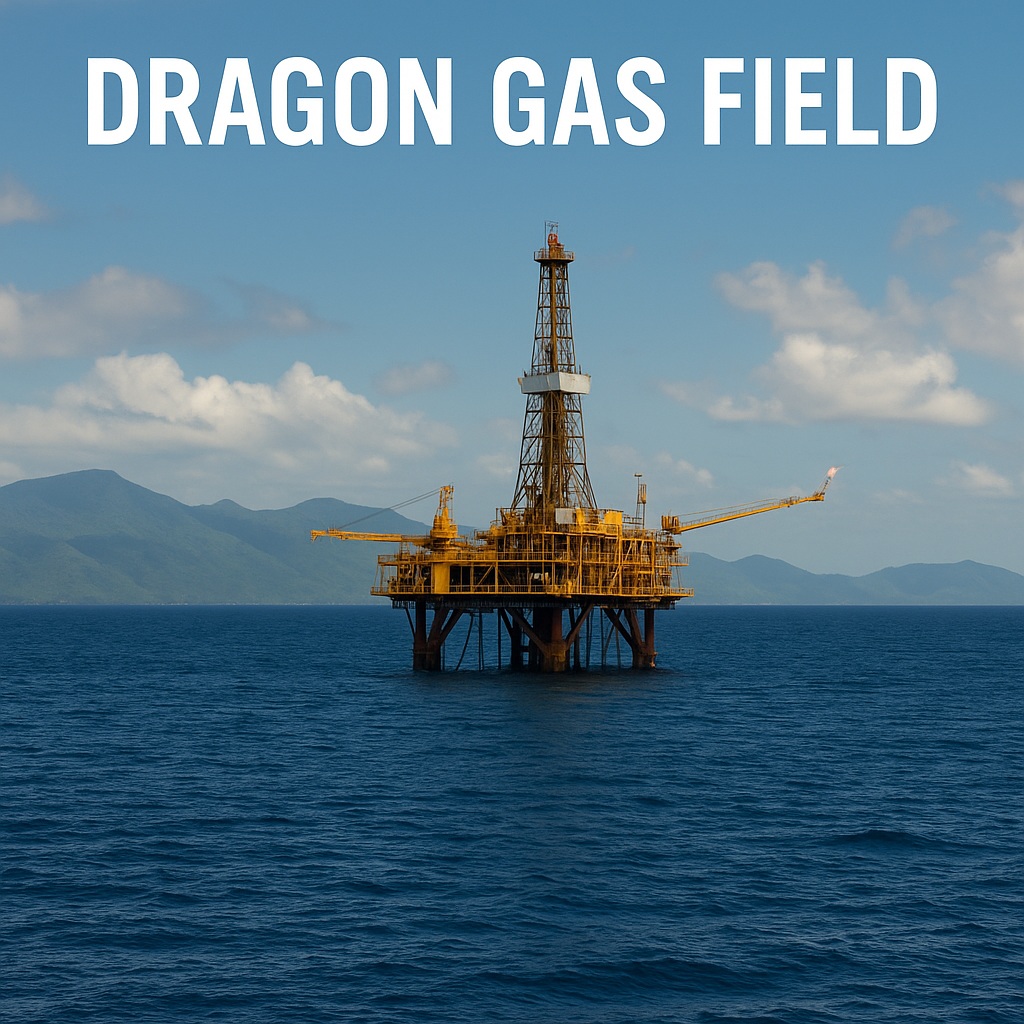
Her government, she said, has been moving away from reliance on the long-delayed joint Dragon gas field, which sits in Venezuelan waters near Trinidad.
The USS Gravely, a guided-missile destroyer, arrived on Sunday in the Trinidadian capital, Port of Spain, with US Marines on board before planned joint military exercises.
Trinidad’s government said that joint exercises with the US happen regularly but Venezuelan authorities described Trinidad’s decision to host the ship as a provocation.
The two countries are separated by a small bay just 11km wide at its narrowest point.
The Pentagon has so far deployed seven warships to the Caribbean as well as a submarine, drones and combat aircraft. Another warship has taken up position in the Gulf of Mexico, or the Gulf of America as the White House insists on calling it.
The US has also announced that the USS Gerald R Ford, the world’s largest aircraft carrier, which can host up to 90 airplanes and attack helicopters, is on its way.
A combined approach to drill for gas was initially agreed between Venezuela and Trinidad and Tobago in 2018. However, the project has been delayed by US sanctions on Venezuela.
###
Related articles:
While Washington Threatens, Beijing Invests: China’s Growing Influence in the Caribbean
A New Caribbean Crisis: U.S. Warships, Venezuela, and the Monroe Doctrine
U.S. Military Intervention – A Historical Overview
Tensions Escalate as U.S. Deploys B-52 Bombers Over Caribbean Amid Venezuela Standoff
###
ADVERTISEMENT