Advertisement





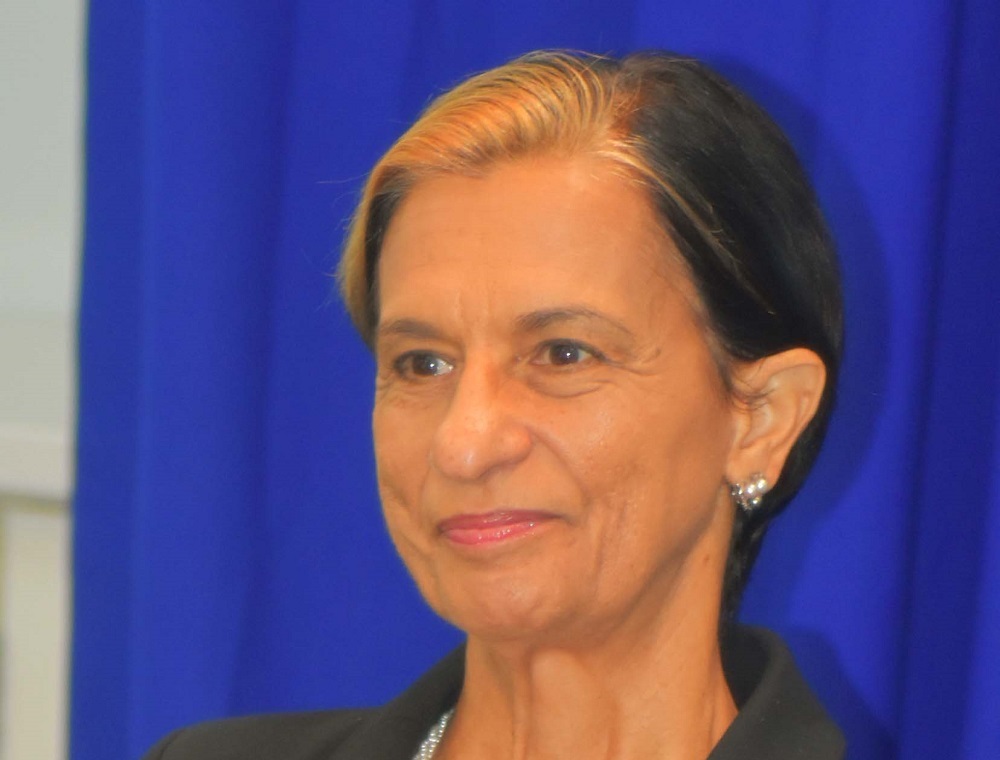 PHILIPSBURG — Chairlady of St. Maarten’s parliament, Sarah Wescot-Williams, has entered the debate about the leadership of the Central Bank of Curacao and St. Maarten (CBCS) with a letter that puts the importance of institutional stability, credibility and public trust above the question of “whose turn it is.”
The CBCS supervisory board has been without a chairman for four years. Richard Doornbosch is the president of the bank’s executive board.
MP Wescot-Williams outlines in her letter the history of the chairmanship. In 2017 Etienne Ys was appointed as a candidate for Curacao. When his term ended, vice-chair Dennis Richardson recommended an extension of his tenure. But Ys withdrew and the supervisory board retracted its recommendation.
According to Wescot-Williams internal disagreements intensified and the ministers of Finance of Curacao and St. Maarten agreed to present a joint proposal for the position of chairman.
In December 2021 the supervisory board of directors nominated Dennis Richardson for the position. Both ministers of Finance agreed and the minister from Curacao even reminded his colleague in St. Maarten of the nomination. At that time, St. Maarten had not yet amended its national decree that governs the screening of CBCS-officers and as a result the screening of Richardson did not proceed. St. Maarten then proposed attorney Jairo Bloem.
Rotation of the chairmanship of the CBCS between Curacao and St. Maarten is “not legally codified.” Instead, it is based on “practice and political understanding,” MP Wescot-Williams points out. “Framing the current debate as strictly a matter of whose turn it is oversimplified a complex institutional process.”
She emphasized that institutional clarity is important but that the greater issue is the health and effectiveness of the monetary union itself. “Curacao and St. Maarten face pressing economic and financial challenges that demand coordinated policy, regulatory stability and strong governance.”
Instead of focusing on who will be the next CBCS-chair, Wescot-Williams proposes to address structural bottlenecks within the monetary union and strengthening regulatory oversight and financial sector resilience. She also suggests other measures: to ensure transparency, credibility and institutional stability within the CBCS, to safeguard the shared currency and to protect the economic confidence in both countries.
“The stability of our monetary union must transcend individual appointments. Leadership matters, but institutional coherence, economic resilience, and public trust matter even more,” Wescot-Williams concludes, adding, “Now is the time to move beyond procedural disputes and refocus on strengthening the foundation of our financial systems.”
###
ADVERTISEMENT