Advertisement





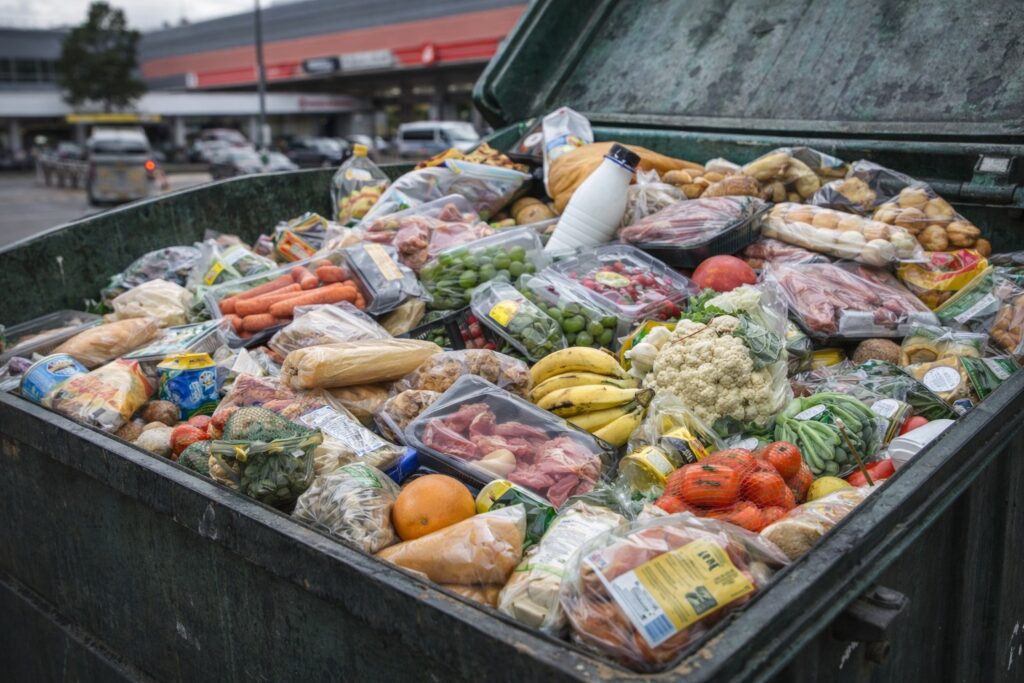
In 2016, France adopted Law No. 2016‑138 on fighting food waste (often called the “Garot Law,” linked to Guillaume Garot). It wrote a clear priority order into the Environment Code: prevent waste first, then use unsold food that is still safe for people (donation or processing), then animal feed, and only after that composting or turning it into energy.
It also created a concrete duty for large food retailers. Stores above the 400 m² threshold must offer to sign a donation agreement (a formal convention) with one or more approved food aid charities, so edible unsold food has a real path to people instead of becoming landfill by default. Over time, France expanded this “must have a donation convention” rule to cover some large food manufacturers, large collective catering operations, and large food wholesalers too.
The 2016 reforms explicitly banned deliberately making still edible unsold food unfit. Parliamentary debate documents and consumer guidance discussed the goal of ending practices like bleaching or chemically contaminating edible food to stop people from taking it. In France it is called “javellisation.”
In the 2016 law text, the penalty for deliberately ruining edible unsold food was €3,750. Later reforms strengthened sanctions. Today, the Environment Code allows a maximum fine tied to the establishment’s sales for deliberately making edible unsold food unfit, up to 0.1% of the last annual sales, with the amount scaled to the seriousness of the violation.
What the French rules actually require
France did not pass a magic law that makes waste disappear. Food still goes bad. Sometimes it is unsafe. What France did is change the default behavior. It made it illegal to sabotage edible food, and it required large retailers to build a real donation pathway through agreements with approved food aid groups.
The law also recognizes a practical limit: donation only works if the receiving group has capacity. Official guidance for businesses notes that a charity can refuse all or part of a donation when transport, storage, or distribution capacity is not sufficient, or when the food appears unsafe on inspection.
France also pushed for more professionalism around donations, not just “drop off a box.” A 2019 evaluation for the agriculture ministry describes how the law helped structure partnerships and expand donations, but also flags friction and limits, such as the workload and storage constraints charities face, and the importance of sorting quality.
What changed after 2016 and what other countries did
France’s approach became a reference point because it was one of the first national laws to require large retailers to put donation systems in place, instead of relying only on voluntary promises.
Other countries moved too, but in different ways.
Italy adopted Law No. 166/2016 (often called the Gadda Law). It focuses more on making donation easier and more attractive, for example by simplifying procedures and using tax incentives, rather than placing the same kind of mandatory donation convention duty on all large retailers.
Czech Republic adopted a mandatory rule for large stores as well. The European Commission summarizes that since 2018, stores over 400 m² are obliged to donate unsold but safe food to charities.
Now the big question….
Why do people go hungry in a world of plenty?
People go hungry because hunger is usually not about “no food exists.” It is about people being locked out of food by money, power, and circumstance.
The world produces a huge amount of food. The Food and Agriculture Organization of the United Nations has pointed out that global production can supply sufficient daily calories on average, but poverty and inequality block real access for millions.
And hunger remains massive. The State of Food Security and Nutrition in the World 2025 estimates about 673 million people faced hunger in 2024, and about 2.3 billion experienced moderate or severe food insecurity.
At the same time, we waste staggering amounts. Food Waste Index Report 2024 estimates about 1.05 billion tonnes of food were wasted in 2022 across households, food service, and retail, about 19% of food available to consumers.
So why can both things be true at the same time?
Because modern food is treated like a product first and a human need second. Stores are rewarded for full shelves, lots of choice, and “perfect” looking products. When demand is hard to predict, extra stock becomes a kind of business insurance. When it costs staff time, cold storage, and transport to move food quickly, dumping it can look cheaper than saving it. When a system rewards waste, waste grows.
Meanwhile, hunger is driven by pressures that hit ordinary households: low incomes, high living costs, and sudden shocks. The World Food Programme describes conflict, climate extremes, and economic shocks as major drivers of today’s hunger crises.
What is fundamentally wrong, and what would make sense instead?
If you want the blunt answer: we have hunger because we allow poverty, and we have waste because waste is often cheaper than care.
A society can grow more than enough food and still have empty stomachs if the bridge between farms and families is only money, and too many people do not have enough of it. That is why a law like France’s matters. It proves waste is not “natural.” When the rules change, behavior changes.
But a donation system, even a legal one, still leaves the deeper issue untouched: nobody should have to depend on somebody else’s leftovers to eat. Donation can help in a crisis, and it can reduce waste, but it is not dignity.
What would make sense is a mix of simple, human things. Wages that match real living costs. Strong support when jobs disappear or prices jump. Waste prevention that starts earlier than the trash bin, including more flexible standards and planning so good food does not get rejected for cosmetic reasons. And for the food that truly cannot be sold, safe low friction ways to move it quickly to people who can use it, without pushing all the cost and risk onto charities.
The real test of a society is not whether it can produce food. It is whether it can organize itself so that people get to eat.
###
ADVERTISEMENT