Advertisement





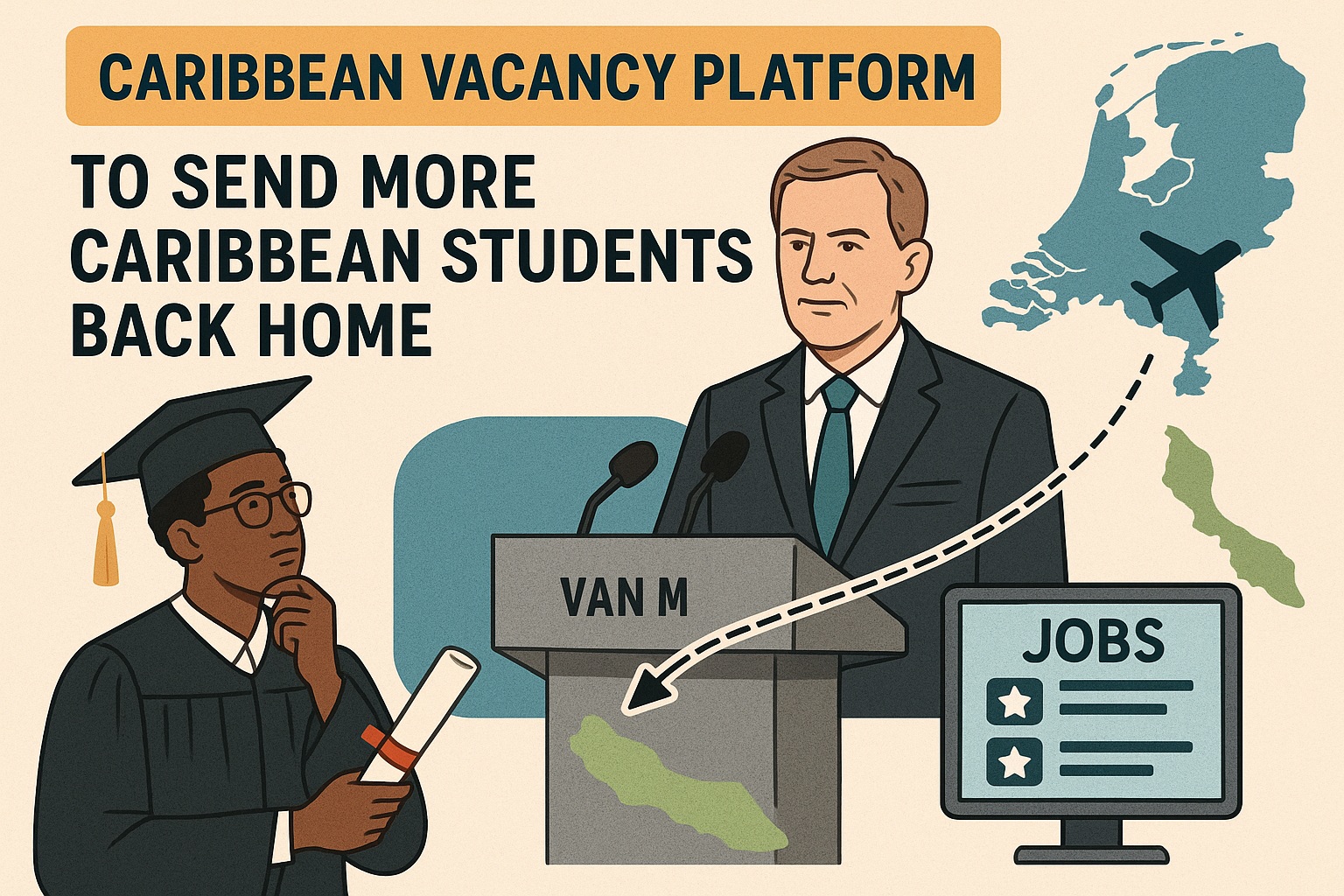
THE HAGUE –State Secretary Eddie Van Marum has announced the establishment of a Caribbean vacancy platform. The objective is to stimulate the return of students who have completed their studies in the Netherlands to the island where they were born.
Van Marum, a member of the rightwing BoerBurgerBeweging (BBB) political party, almost makes this initiative look like a good idea but when you dive deeper into the challenges Caribbean students face in the Netherlands, a different picture emerges.
The platform intends to match Caribbean students and “studying talents” with job opportunities and internships on the islands. Van Marum claims that this platform strengthens the connection between education and the labor market and that it improves the wellbeing of young people because it will give them an idea about the options for internships and career development and strengthen the ties with their island.
Looking at this from a different perspective, it could also be that the platform’s objective is to send as many Caribbean students back home as possible. There is a reason for this.
Every year, around one thousand Caribbean students depart for the Netherlands to pursue higher education. Their success rate is not only disappointing, it is also reason for serious concern.
Students encounter problems with the Dutch culture and also with the Dutch language. Studies found that only 10 percent of these students speak Dutch at home. This language barrier has a negative effect on study results. Only 20 percent graduate from a university of applied sciences within five years; only 40 percent obtain an HBO-diploma after eight years and 75 percent completes its WO-study within the same time period.
Another study found that only 40 percent of the students return to the Caribbean after their studies, while another report notes that just 38 percent of emigrants from Bonaire, Statia and Saba return home within seven years.
A significant number of students does not return to either Curacao, Aruba or St. Maarten because salaries on the island are lower on the islands while the cost of living is higher. Furthermore, students have difficulties finding a job that matches their qualification. Exact numbers are not known.
Against this background it remains to be seen how successful Van Marum’s vacancy platform is going to be. The math is not difficult: if just 40 percent of these students returns home after their studies, the Netherlands remains stuck with 600 additional Antillean students each year – and that number does not include those who drop out and disappear from the radar.
###
ADVERTISEMENT