Advertisement





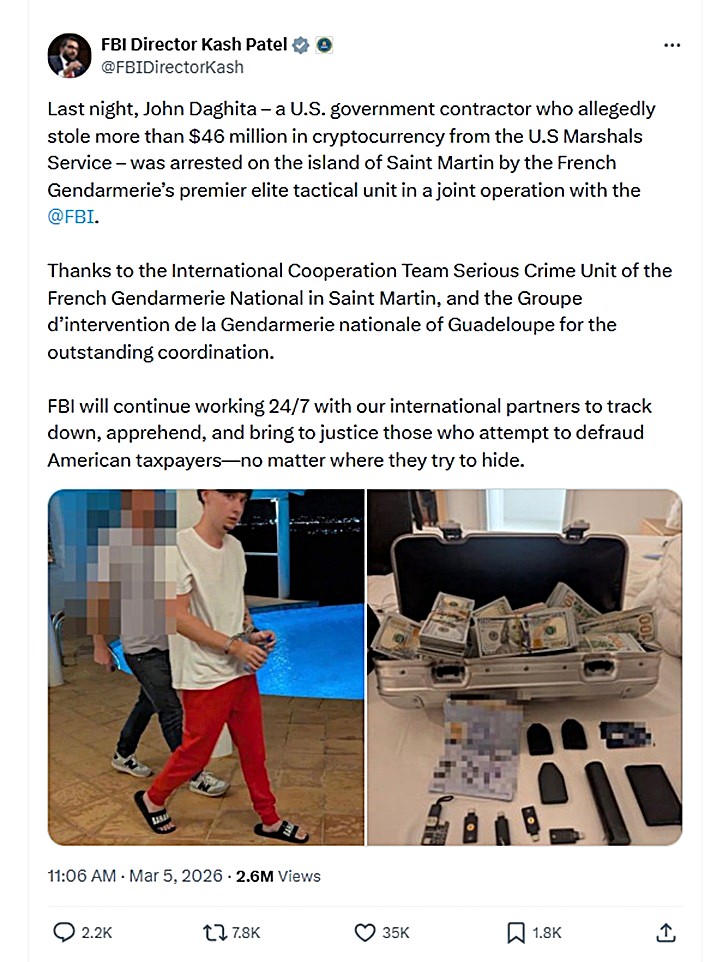
FBI Director Kash Patel confirmed on Thursday that the suspect wanted in connection with the alleged theft of more than US $46 million in cryptocurrency from the United States Marshals Service was arrested on St. Martin during a joint international law enforcement operation.
In a statement posted on the social media platform X (Twitter), Patel said the suspect, identified as John Daghita, was taken into custody overnight by the elite intervention unit of the French Gendarmerie in cooperation with the Federal Bureau of Investigation.
Patel’s post quickly gained traction online, and by midnight it had received approximately 2.6 million views and generated more than 2,200 comments from users reacting to the international arrest.
Many commenters praised the cooperation between French and American law enforcement agencies and congratulated authorities for apprehending the suspect abroad. Others expressed surprise that a person accused of stealing such a large amount of cryptocurrency had been located on the small Caribbean island of St. Martin, while some users called for swift extradition and prosecution in the United States.
News of the arrest quickly spread internationally, with reports appearing across major global media outlets and financial and technology publications. Among the outlets reporting on the case were CBS News, Fox News, Forbes and several international news services and online platforms, highlighting the unusual nature of a multimillion-dollar cryptocurrency theft investigation leading to an arrest on the Caribbean island.
The case has attracted significant international attention because the alleged victim of the theft is the United States Marshals Service, the U.S. federal agency responsible for managing and auctioning assets seized in criminal investigations, including large amounts of cryptocurrency obtained in cybercrime and fraud cases.
Experts note that alleged thefts involving government-controlled cryptocurrency are rare, particularly when the suspect is reported to be a contractor working with the agency. The case therefore raises questions about internal safeguards surrounding digital asset management and the security procedures used to store and monitor seized cryptocurrency.
###
ADVERTISEMENT