Advertisement





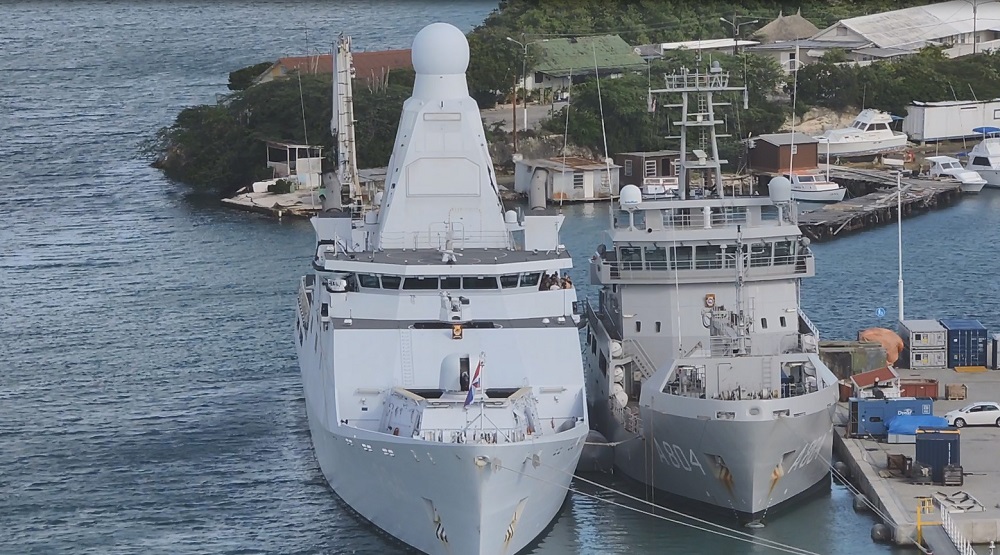
~ while tensions rise between US and Venezuela ~
THE HAGUE — The rising tension between the United States and Venezuela is reason for serious concern on Curacao and – to a lesser degree – on Aruba. The Dutch newspaper Trouw posed the question what the Netherlands can do for the Caribbean part of the Kingdom. Peter Wijninga, a defense expert at the Hague Centre for Strategic Studies came with the clearest answer. He told Trouw that the Netherlands cannot do much to put pressure on the United States, comparing the two countries as a mouse and an elephant.
That the Netherlands has to play a more active role is nevertheless the opinion of several Dutch parliamentarians and of some experts. They urge the government to take diplomatic action. But what can the Dutch really do? Sources spoke to Trouw about “Keeping close contacts with the Americans” and “a shared concern with the inhabitants of the islands.”
Outgoing Minister of Defense Van Weel said that there is “no acute military threat” and at the same time he is not prepared to condemn the American attacks on alleged Venezuelan drugs boats.
Last week the conflict escalated further when an American military plane almost collided with a civilian aircraft. This was due to the fact that the Americans shut down their transponders to remain invisible for Venezuelan radar systems.

The captain of the cruise ship Norwegian Epic decided not to go to Curacao because of navy-exercises in the area. Instead, he sailed on to Barbados.
The Dutch parliament approved two motions last week. One of them states that the Netherlands must not support the American military actions by providing information. The second motion states that the Caribbean part of the Kingdom can always rely on military support and assistance from the Netherlands.
In the meantime, Curacao fears loss of income if tourists stay away. Opposition leader Giselle McWilliam has said that Prime Minister Gilmar Pisas has to act diplomatically towards the United States, together with the Netherlands. The Hague must make clear that military traffic cannot use Curacao-controlled airspace without prior permission. Uncoordinated flights are unacceptable and they undermine our sovereignty, according to McWilliam.
On Aruba, Prime Minister Mike Eman takes a more reserved position. He says that the island is working on resilience and that he consciously does not communicate a lot about it to prevent unrest and damages to the tourism industry.
Defense expert Wijninga, conscious of his country’s underdog position in negotiations with the Americans, says that there are nevertheless things the Netherlands can do, for instance by installing military aerials on the airports that will enable them to see American military aircraft. Furthermore, he says, all this does not release the government from its obligation address the situation with the Americans.
###
Related articles:
When Superpowers Play, Small Islands Pay: How US–Venezuela Tensions Threaten the Caribbean’s Lifeline
###
ADVERTISEMENT