Advertisement





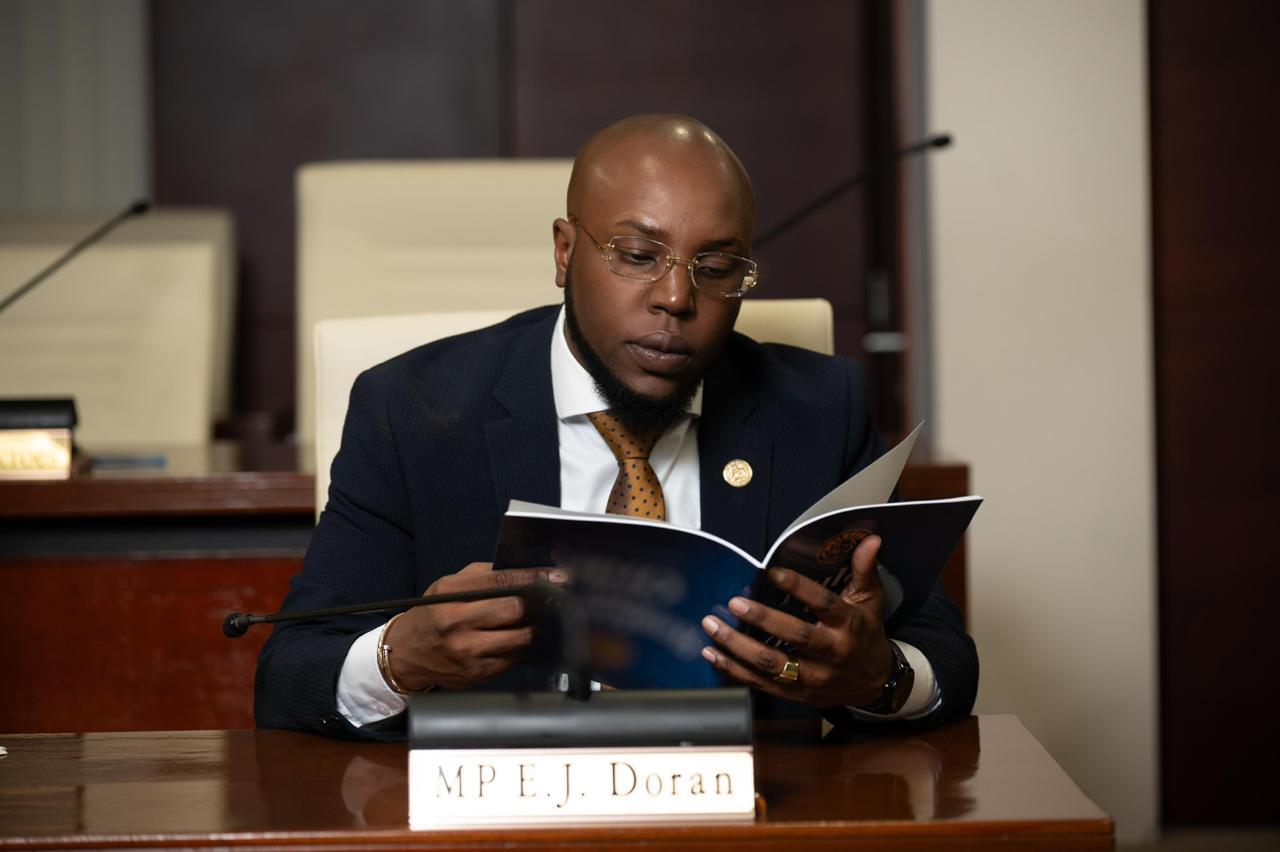
PHILIPSBURG — Tensions over parliamentary oversight and the role of the General Audit Chamber surfaced in Parliament on Tuesday as Members of Parliament began reviewing the institution’s 2024 annual report. National Alliance MP Egbert Doran used the Central Committee meeting to question why the Audit Chamber declined to immediately carry out a requested review into public funding related to the Soul Beach music festival.
The meeting, chaired as Central Committee No. 15 for the parliamentary year, opened with a welcome to Audit Chamber Chairman Alphonse Gumbs, Secretary General Keith de Jong, board members and supporting staff. The agenda focused on the annual report of the General Audit Chamber for 2024, a document received by Parliament on March 14, 2025.
Parliamentarians described the session as an important opportunity to examine the chamber’s role in safeguarding public finances, particularly during a period of economic pressure and heightened scrutiny over government spending.
Oversight role highlighted
In his opening remarks, MP Doran emphasized that the Audit Chamber’s mission centers on oversight of government funding, sound public financial management and accountability for the use of public resources. Referring to Article 74 of the Constitution, he said these principles define the institution’s purpose.
Doran noted that during his tenure as Minister he had considered the Audit Chamber to be a fair and objective body. However, he said his perspective shifted after Parliament adopted a motion requesting an independent review of the government’s financial and administrative handling of support for the Soul Beach music festival.
The motion called on the Audit Chamber to examine the application and approval process, legal advice obtained, budgetary allocations, payment mechanisms and ministerial decision-making related to the event. It also asked that findings help inform clearer subsidy policies, including eligibility criteria, procedural standards and transparency requirements for large-scale events receiving public funds.
“This was not the request of a single Member of Parliament,” Doran said, stressing that the motion represented a formal decision of the legislative body. “It was Parliament asking for clarity on public funds.”
Dispute over response
According to Doran, the Audit Chamber responded in July 2025 by outlining several considerations and suggesting alternative oversight tools available to Parliament. These included requesting information directly from ministers, holding Central Committee hearings, engaging external experts or, if necessary, initiating a parliamentary inquiry.
The MP criticized what he described as an unusual shift in tone, arguing that the Audit Chamber appeared to be advising Parliament on how to conduct its own oversight.
“You have the Audit Chamber telling Parliament what to do,” he said, adding that the legislature had exercised its legal authority under Article 31 of the National Ordinance governing the Audit Chamber.
Doran questioned why the chamber proposed that Parliament consider hiring an external entity to conduct financial reviews instead of carrying out the requested investigation itself. He said the suggestion raised broader concerns about the institution’s willingness to respond to parliamentary requests.
“If Parliament asks for an audit into public funds, why are we being told to get another organization to investigate?” he asked.
Follow-up correspondence
The MP outlined a series of follow-up communications between Parliament and the Audit Chamber. In October 2025, he said, additional clarification was provided to emphasize that the requested review concerned only public funds and the associated government processes—not private contributions linked to the event.
According to Doran, the letter argued that the presence of private funding does not remove the Audit Chamber’s responsibility to examine the public portion of financial support, including subsidies, services or logistical assistance.
A subsequent response from the Audit Chamber in November 2025 reiterated that requests from Parliament are considered within the framework of its governing ordinance and that the institution retains independence in determining whether and how such requests are included in its audit program.
The chamber indicated that it would deliberate the possibility of including a thematic audit into public subsidies within its 2026 annual plan, a statement Doran described as too vague.
“My question is simple,” he said. “Will the Soul Beach process be audited — yes or no?”
Concerns over public funds
Doran argued that the issue goes beyond a single event and touches on broader concerns about transparency and accountability in the handling of government subsidies. He said the original motion also aimed to strengthen future policy by clarifying distinctions between for-profit and non-profit entities and ensuring consistent documentation standards.
The MP pointed out that the Soul Beach event has since relocated to Curaçao, raising questions about how government support was managed and whether the island achieved the intended economic benefits.
“St. Maarten lost the event, and we still don’t have answers,” he said, adding that Parliament’s request was meant to help improve oversight processes and prevent similar controversies in the future.
Doran acknowledged that the institution must remain independent but argued that declining to act on a formal parliamentary motion risks undermining the legislature’s oversight role.
“As representatives of the people, we are asking for clarity on how public funds were used,” he said. “That is not political — that is accountability.”
Audit Chamber responds
In response, Secretary General of the General Audit Chamber Keith de Jong briefly addressed the question before handing the floor to Chairman Alphonse Gumbs.
“The Soul Beach audit — that’s a very interesting question,” De Jong said, noting that he would allow the chairman to provide a full answer.
Chairman Gumbs told Parliament that the Audit Chamber respects requests from lawmakers and views Parliament as one of its key institutional partners. However, he explained that the chamber’s concerns were not about the intent of the motion but about the legal and practical feasibility of conducting the specific audit requested.
“Our concern was not with the intent, but with practical and legal feasibility within our mandate,” Gumbs said. He noted that when the request was first assessed, the chamber found that public and private funds linked to the event were not clearly separated, complicating a direct investigation into a single project.
According to the chairman, the Audit Chamber will not conduct a direct audit of the Soul Beach event itself. Instead, the institution plans to review the broader process through which government funds were allocated.
“We do not look at the individual item; we look at the process,” Gumbs explained. He said the board is considering the matter under a wider audit of incidental subsidies that could be included in the 2026 annual audit plan, which would examine how public funds are handled rather than focusing on one specific event.
De Jong added that the chamber’s board deliberated extensively after receiving additional clarification from Parliament. While the annual audit plan remains confidential, he confirmed that the board decided to expand its work program to include an audit related to incidental subsidies, partly due to the materiality of the issue and its broader political impact.
###
ADVERTISEMENT