Advertisement





By Tom Clifford
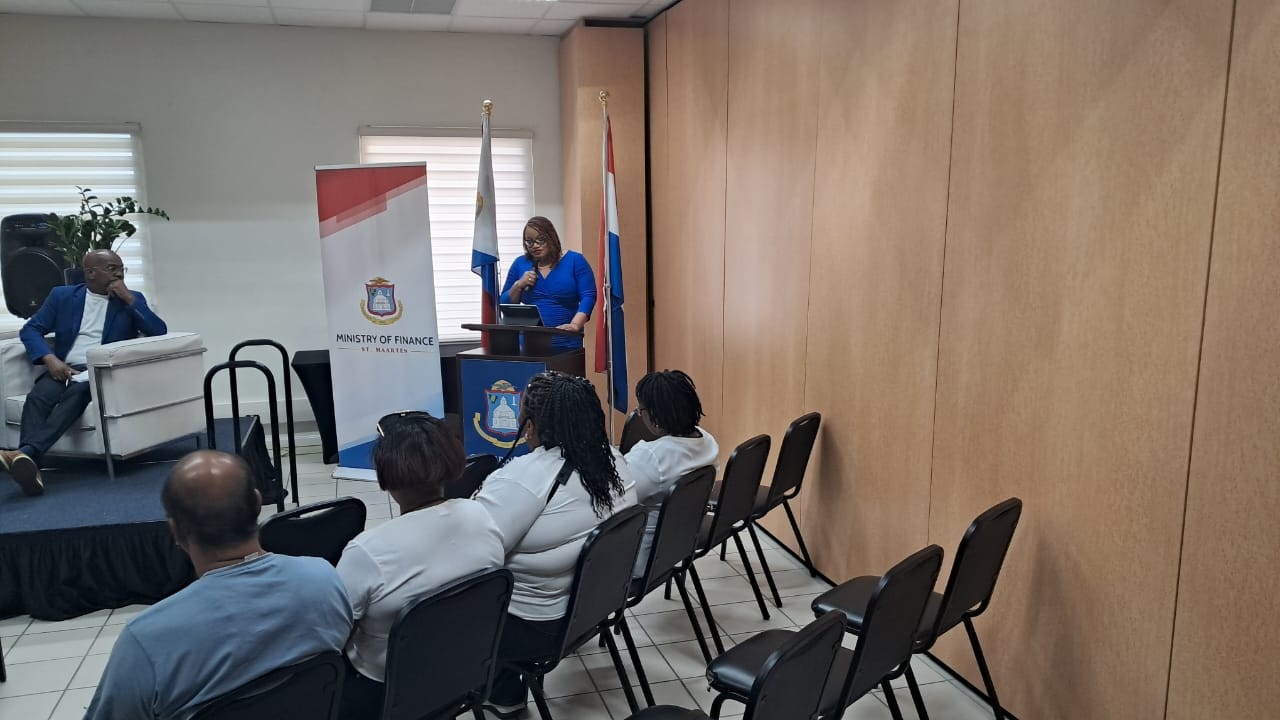
The Finance minister told a group of leading bankers that the sector must be ‘’more responsive to the needs of the public’’.
Addressing the St. Maarten’s Bankers’ Association at a public forum at the Government Administration Building on Sunday night, the minister said the sector is the “backbone of the economy” but too many people cannot avail of its services. The minister, Marinka Gumbs, hosted the event to bring clarity to the many financial questions raised by the public.
“Seventeen per cent, about 7,400 people are unbanked,’’ the minister said and this means they have to rely on cash transactions.
The requirements to set up an account, proof of income, identification and regular income, can be difficult for some, the minister said.
“Access to financial services is not a luxury,’’ she added.
People without a bank account raise the specter of a two-tier economy, she pointed out and stressed that the social contract has to be inclusive rather than exclusive.
The minister highlighted that the payment infrastructure must be world class and there should be a focus on three key areas.
First, she said, there should be tailored support policies for small and medium enterprises. Secondly, the banks must provide a fully customer-based service. And finally, financial literacy must be improved, empowering citizens to manage their wealth.
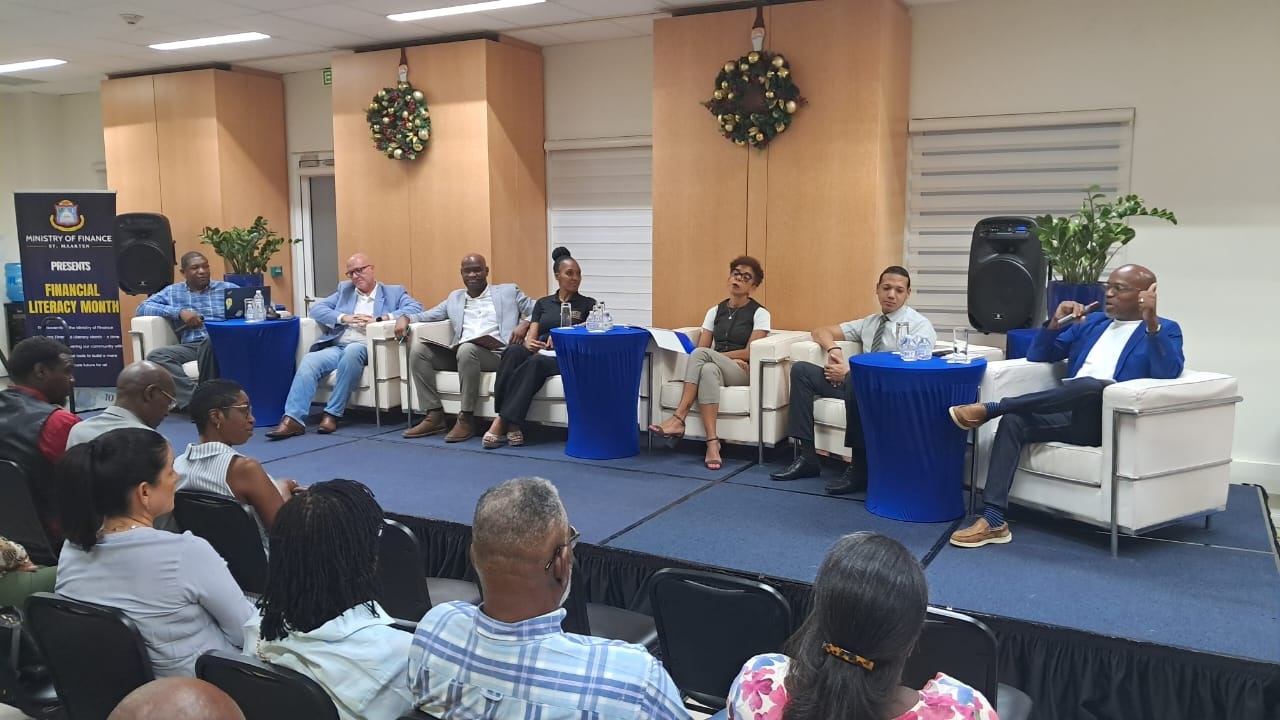
It was this topic that the meeting, chaired by Alston Lourens, was focusing on after a month dedicated to focusing on financial literacy.
Members of the association on the panel attending the meeting were Merle Richardson (ORCO Bank), Rolando Tobias (WIB), Lisandra Ellis-Havertong (RBC Bank), Adimir Artsen (Banco di Caribe), Sterl Lyons (Republic Bank) and Wayne Johnson (APC Bank).
Johnson told the meeting that banks face major challenges, not least the cost of living.
The panel agreed that banks should not be just about a customer coming in to sign a mortgage or loan agreement. They should have more of an advisory role where customers could come in and discuss their plans and ambitions before actually seeking financial aid for a specific purpose.
Certain international rules and regulations did not always suit the domestic market, but the panel stressed that while certain tweaks could be made to global agreements it is important for the domestic banks’ reputation to remain firmly within the global network. Otherwise, they would face sanctions.
Cyber security was also a major concern, Johnson said.
“Cyber criminals are very smart,’’ he warned, “and they probably know what’s going on in this room right now.’’
They key, the panel agreed, to ensuring security was greater knowledge about money and financial products and this should start in the homes and schools. ‘’A piggy bank in the home can give children an awareness of money,’’ Ellis-Havertong said. And school should have bankers come in and talk to pupils and students to educate them on finance, the panel added.
A member of the audience raised the advantages of term deposits for young people rather than mortgages. The panel agreed that they provided higher interest rates than savings accounts and required less up-front money than mortgages.
###
ADVERTISEMENT