Advertisement





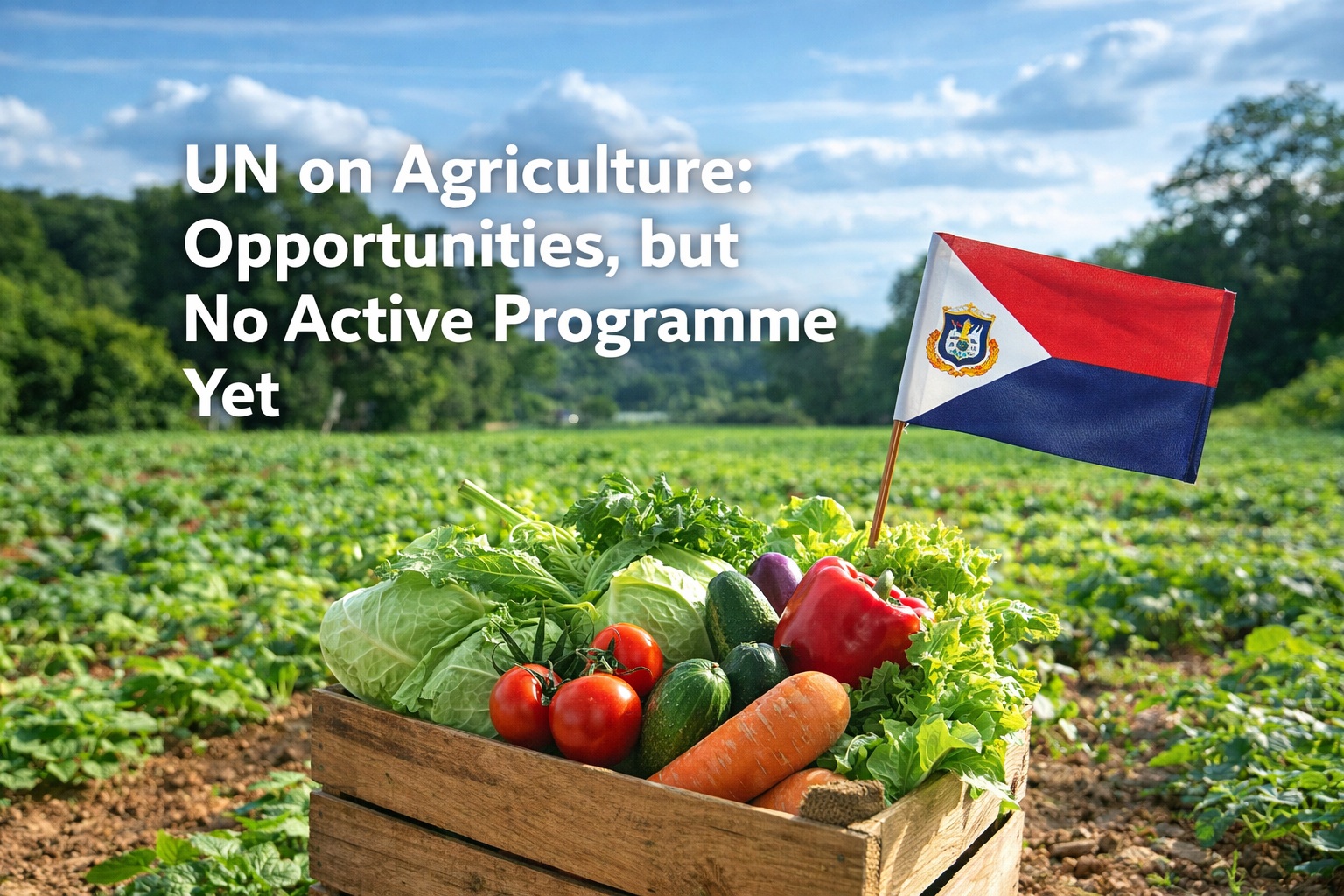
During her interview, United Nations Resident Coordinator Joanna Kazana acknowledged that agriculture and food security are increasingly important issues for small island territories such as Sint Maarten, but clarified that the United Nations is not currently implementing an active agriculture programme on the island.
Kazana described food security as closely linked to public health, economic diversification, and resilience, noting that the quality of food consumed by the population has long-term impacts on wellbeing. She also highlighted the potential benefits of local food production, including empowering farmers and reducing dependency on imports.
At the same time, she cautioned that agriculture in small island environments is particularly challenging due to climate vulnerability, droughts, hurricanes, and unpredictable weather patterns. “It is not easy to be a farmer,” Kazana said, pointing out that sudden environmental changes can quickly disrupt livelihoods.
She explained that while the UN system has not been actively working in agriculture in Sint Maarten, it remains open to exploring opportunities if they align with national priorities and government-led strategies. Any future engagement, she stressed, would depend on clear policy direction, national commitment, and available funding.
According to Kazana, the UN’s role is to support and facilitate initiatives that governments choose to pursue, rather than introduce programmes without local ownership.
Related articles:
UN Resident Coordinator Says Point Blanche Prison Groundbreaking Signals Shift from Planning to Action
EDITORIAL – Why the Point Blanche Prison Groundbreaking Matters
Point Blanche Prison Groundbreaking Marks Turning Point After Years of Delays
###
ADVERTISEMENT